

The Winter of Life

trees covered with snow in snow storm

My elderly mother lives in an assisted living apartment a few miles from where I live. Both she and I are thankful that she didn’t need to leave her home until she was 94. We’re also thankful she has relatively good health for her age. I visit Mom several times a week. I do that because she tells me she enjoys my visits, because I love her, and because it is a priority for me to do what I can to help her have as nice a life as possible. I also believe it helps elderly people to have at least one person whose presence is consistent, a person they can count on.

My mother is well into the winter of life, and I am in the fall of life. When I visit her I see the other people who live on her floor, many of whom have come to recognize me, and we greet each other. Although Mom is the oldest, the others are also in the winter of their lives. Most of them have some degree of memory loss and most need to use walkers. I sometimes think about how 20 to 30 years ago they were the age I am now, they had careers or were homemakers, many had spouses and children, some had pets. Being their ages, they have all naturally experienced loss, including the passing away of a spouse and other loved ones. There have been other losses, too: loss of good health, mobility, clear thinking, decision-making, and independence.

Visiting my mother and seeing the other people where she lives reminds me to appreciate my life, to cherish my good health and the abilities I am blessed to have. It also reminds me to use my time well, to not take it for granted, and to make healthy choices, such as eating nutritious food and exercising to help me stay as healthy as I can be for as long as I can. Time goes by so quickly and the time will come when I will pass from the fall to the winter of life. I pray that I will do so with grace and acceptance of the changes that will come.
Individuation

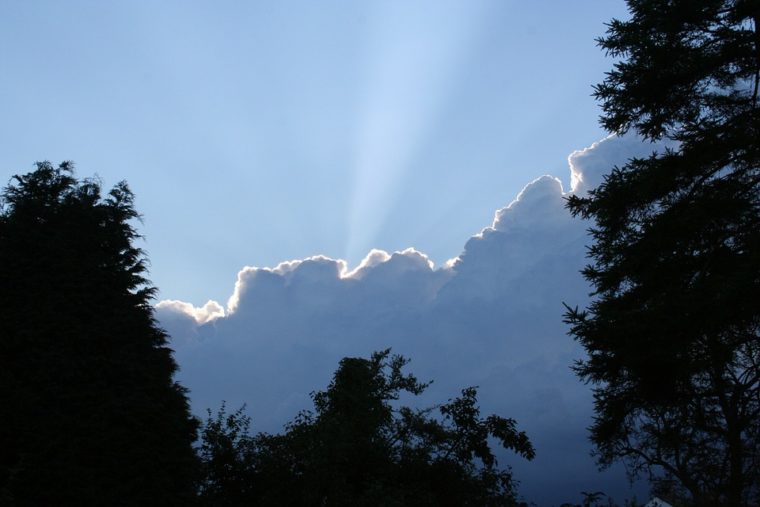
sunlight coming out through clouds

As I have said in other posts, working with a Jungian therapist and learning about Jungian psychology have added greatly to my life. One of the principle concepts of Jungian psychology is called individuation. Individuation is an inner process where a person grows in consciousness and becomes more whole. Unconscious content is brought to consciousness through dreams, intuition, and synchronicities (meaningful acausal events–see my posts titled “Synchronicities” and “Unlocking Gifts” where I write about synchronicities in more detail). Individuation is a lifelong process, never completed in this lifetime.

My life is more meaningful because I am more conscious than I used to be. And having grown in consciousness has helped me to better understand and empathize with other people. I don’t want to suggest by any means that I “have it all together.” As much as I value the ideas of growth and change, I, like most people, also have times when I resist it. I’m reminded of how C.S. Lewis in one of his many wonderful books, Mere Christianity, describes inner work. Lewis compares God’s making changes within people to a house being remodeled and enlarged: Walls are torn down and rooms are added, and we question why this is needed when we believe we would be perfectly content staying the little cottage we were before. Similarly, John A. Sanford, Jungian analyst, author, and presenter, in one of his presentations speaks about resistance to doing the work of individuation: “We like our job, our home, our car, we earn enough to keep up with inflation, mow our yard on Saturdays–we like our life as it is. We don’t want things to change.” There is a resistance to putting effort and energy toward doing something more than we are already doing.

And yet doing what is required to become more conscious adds meaning to a person’s life. Many people question their purpose. I hear this from callers quite often in my work as a crisis line counselor. Making the effort to try to follow one’s inner direction involves challenges, difficulty, and even suffering. But it also makes possible a sense of peace, even as one is going through a difficult period. And at times there is a feeling of joy that a person cannot “manufacture,” the kind of joy that is pure gift.

Perseverance

In my work as a crisis line counselor, I speak with callers of various ages and who have a variety of concerns.  A concern that comes up frequently is struggles with addiction.  Callers have reached the point where they know their addiction is hurting themselves and others and they want to stop–whether it be alcohol, other drugs, gambling, cutting, and/or other behaviors.  It is very difficult to stop doing a behavior that has become addictive.  But thankfully many people have succeeded in maintaining sobriety; there are many success stories.  I respect people who work hard to stop their addictive behavior in order to make their lives and the lives of the people they love better.  Knowing that others have succeeded can bring hope to those who are trying to stop.

It is generally difficult for a person to do this without the assistance of other people.  There are 12-step programs for all types of addictions that help people stop the behavior and also provide ongoing support to decrease the chances of them starting again.  For some people, doing individual work with a therapist is what helps most.  Others have found the help they needed by attending a residential treatment program.  No matter what type of assistance is provided, it is the person who has the addiction who does the difficult work of taking the steps toward sobriety; he or she perseveres.

Perseverance is a quality that is essential to living life well.  Although in this post I’ve focused on the difficulties of addiction, perseverance is needed to deal with every type of challenge.  Life naturally gives us challenges, and doing our best to make the right choices, to have courage as we follow through on those choices, and to accept the suffering that often accompanies doing the right thing all require perseverance.  And when we’ve made it through that period of difficulty by doing what we knew was right, we will have grown as individuals.