Driving Out Darkness

“Darkness cannot drive out darkness; only light can do that. Hate cannot drive out hate; only love can do that.” When I read these truths expressed by Dr. Martin Luther King, Jr., I thought about symbolism of light.

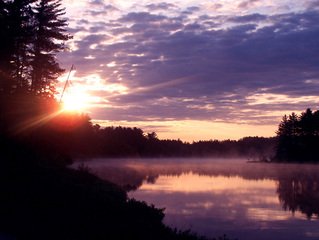
I picture a sunrise, the start of a new day. And how each new day is a new beginning and an opportunity to make good choices and do right actions. I think of the light of understanding, compassion, empathy, justice, and love. Just as the sunrise appears as the night ends and replaces the darkness with light, these qualities diminish and help to drive away close-mindedness, bigotry, complacency, selfishness, and hate.

History records many major movements where light drove out darkness: the end of slavery, peace accords, and civil rights and equal rights laws, to name a few. These achievements started with individual persons making choices and then working with others who had similar visions. It took courage, persistence, and empathy for the suffering of others. And those same qualities are needed today as we endeavor to make this a better world.

Each day each one of us can do our part to decrease where darkness is present. We do that by treating others with respect and by acting with integrity. We do that by trying to hear and follow our inner voice. And we do that through prayer and by growing in consciousness. Embrace each opportunity to add to the light and the love in our world.


Inner Wholeness

“Our dreams seek to lead us to a kind of inner wholeness. But if we are to truly realize this inner wholeness it must be expressed in our outer life of work, relationships, love and commitment.” These words are from the book Dreams: God’s Forgotten Language by Jungian psychotherapist and Episcopal priest John A. Sanford. Dreams bring to conscious awareness information that helps us to grow toward the inner wholeness of which Sanford writes.

When a person reads about dream work and Jungian concepts, records in a journal his or her dreams and related thoughts and associations to dream images, and meets with a spiritual director or Jungian therapist, it might seem as though only that person benefits. And of course she or he does benefit. But Sanford makes clear that doing dream work and through it becoming a more conscious and whole person results in much more than individual personal growth. For becoming more genuine and grounded persons affects every aspect of our lives. It influences the work we are led to and how we approach that work, the people we know and love as well as all people with whom we interact, and the commitments we make, commitments that are based on direction we discern from our dreams, synchronicities, and other meaningful life experiences.

An example of inner wholeness being expressed in a person’s outer life in the form of work, commitment, and love for others is Sanford’s sharing of his knowledge through his writing. He chose to devote many hours to writing, while also being busy in his professions, first as a priest and then as an analyst, and also while raising a family, so that those of us who read his books will have more meaningful lives. This is true of other writers as well who write about concepts that matter, thereby helping those of us who read their books as we try to follow our paths to wholeness.

Our world is comprised of negative and positive, ugly and beautiful, evil and genuine goodness. By endeavoring to realize inner wholeness, we add to what is positive, beautiful, and good, both for ourselves and for others.

Growing in Consciousness

“Every new breakthrough into consciousness has to struggle against opposition from human egocentricity and conventionality.” This quote is from John A. Sanford’s book Dreams: God’s Forgotten Language. Dr. Sanford was a Jungian analyst, Episcopal priest, and author of several books, many of which were about Christianity, spirituality, and Jungian psychological concepts, and their interrelationship. This quote points out two of the most common challenges people face as they try to grow in consciousness.

It is difficult for most, and possibly all, people to make changes. It’s especially difficult when the ideas for what to change and how to change come from a source other than ourselves. Growing in consciousness occurs as we hear our inner voice. Doing our best to follow the direction we are given by our inner voice requires courage and sacrifice. The “human egocentricity” to which Sanford refers gets in the way—questioning, wanting the direction to be different, wanting change to be easier. Each new breakthrough into consciousness is another step that leads to a more genuine and centered way of experiencing life, and thus to having a more meaningful life. It requires recognizing that our egos are not the most important part of our psyches. The self, to use Jung’s term, or the inner voice, to use a more spiritual term, is far more important.

Growing in consciousness leads toward our becoming the unique persons we were created to be, which results in living more purposeful lives. Being unique means not automatically doing what most people do, not “following the crowd.” There are times when following our own paths feels uncomfortable and even painful. Quite often people we know don’t necessarily like the changes they see in us and they let us know that either overtly or in more subtle ways. They are part of the “opposition from conventionality” about which Sanford writes.

As difficult as these forms of opposition are, doing our best to follow our path is what will bring a sense of peace and purpose. We only need to look at the problems of modern society to see that egocentricity and conventionality do not lead to happiness and calm. In addition to a sense of peace, growing in consciousness helps to develop compassion, selflessness, and wisdom—qualities that truly do matter.

A Note of Appreciation and Thanks

As I have written in other posts, my elderly mother has lived in an assisted living apartment for about six years. Both she and I are thankful she was able to live independently in her home until she was 94 years old. She is now 100, which is quite amazing. However, as a result of both cognitive and physical changes this past year, my mother requires considerably more assistance from staff than she did the first few years living there.

I would like to say thank you to staff who work at assisted living facilities and nursing homes. There are aspects of their jobs that are very difficult and other aspects that are mundane and repetitive. Staff need to have patience, such as when they feed and bathe people who can no longer do those things for themselves. At other times staff need to act quickly, such as when helping someone who has fallen and been injured. Employees at these facilities do not earn very much money and yet the services they provide are essential. For we count on them to take care of the people we love who can no longer take care of themselves.

As in all occupations, some employees are more invested in what they do and more able to carry out their job duties well. So I am realistic and I do not suggest that all assisted living and nursing home staff are equally dedicated, qualified, and skilled. But many do have those qualities. I’m always impressed at how some of the staff are as positive as they are. They are “naturals” at doing the work they do. Their cheerfulness makes it nicer for the people they care for and helps them to feel better. For this I am very thankful.