
dum

If you have read my other blogs, you know I think highly of the writing of John A. Sanford, a Jungian analyst, writer, and speaker, who also was an Episcopal priest for 19 years. In his book Dreams and Healing, Sanford writes: “Dreams also help us by showing us what it is upon which we should focus our attention. It is easy to be overwhelmed by our fears, the confusion of life, and the myriad small and great worries that beset us. A dream gives us an image of what it is we most need to ponder. In this way dreams can lift us beyond the narrow confines of our ordinary conscious life, and present us with a larger picture.”

I have found this to be true. In my experience, and based on reading I’ve done, some dreams are more clearly meant to direct a person to take some type of action. And when a person has a dream like that, trying to take the steps toward accomplishing what the dream is directing is what matters most. As Sanford says, that is where we should focus our attention. Because dreams when properly understood help us to learn about ourselves by bringing unconscious content to consciousness, each person becomes more whole as he or she tries to follow dream direction. This takes courage because we don’t necessarily know what will result from following dream direction.

A number of years ago I had a dream where several women were busy packing my belongings, putting them into boxes and sealing the boxes. For a few months before having that dream, I had thought it might be time to move to a different city, and this dream confirmed that yes, I needed to move. I didn’t particularly want to move; it would be costly, I would need to find a job, I would be leaving friends I cared about. But this dream was so clear in its meaning that I knew I would be going against what was right for me if I didn’t follow the dream’s direction. And I’m happy to say I have never regretted moving to where I live. My family and I benefited in many ways because I followed the direction of the dream.

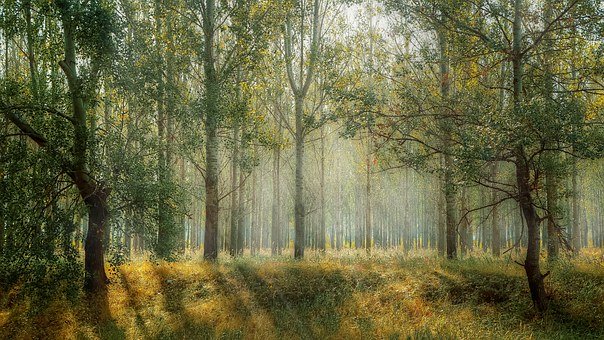
Nature’s Gifts Belong to All of Us

“The voice of my grandfather said to me, the air is precious. It shares its spirit with all the life it supports. The wind that gave me my first breath also received my last sigh. You must keep the land and air apart and sacred, as a place where one can go to taste the wind that is sweetened by the meadow flowers.”

These beautiful words were spoken by Chief Seattle, part of a speech he made during negotiations with the U.S. government on behalf of white settlers, “negotiations” where the Native people had basically no say. He was chief of the Suquamish and Duwamish Indians in the Pacific Northwest in the mid-1800s. Even as he and his people were having their land taken from them, he asked that those who would live there after them cherish and take care of that land and water and air.

I am sometimes reminded of Chief Seattle’s words when I’m spending time outdoors. It’s early spring as I write this. Some of the migrating birds have returned and I have the pleasure of seeing them and hearing their songs. In spring there is also the gradually increasing daylight, with the sun rising earlier and setting later. And there is the aroma of budding greenery and flowers. Although I live in an urban area, there is a small lake nearby that has a walking path around it, and I enjoyed taking that walk today. It was a sunny day and it was invigorating to take a brisk walk in the fresh air.

The cloudless blue sky today reminded me of these words from Chief Seattle’s speech: “How can you buy the sky? How can you own the rain and the wind?” For the sky and the rain and the wind and so many other aspects of nature belong to all of us.

Recognizing and valuing our connection to nature add to our wellbeing. Even if we live in urban areas and aren’t able to leave the city very often, we can see the sky and the sun and the clouds—they are a connection to nature too. I’m thankful that many urban planners and decision-makers recognize the importance of having green spaces within cities so those of us living there can walk along tree-lined streets and spend time in parks. We should value our connection to nature of which Chief Seattle spoke so profoundly and do our part to care for these gifts, not only for ourselves but for those who come after us. For he also said, “Preserve the land and the air and the rivers for your children’s children and love it as we have loved it.”

Imagery in Dreams

I had a dream recently that I would like to share with you, because it’s such a good example of how dreams use imagery to present their messages. Here is the dream: I live in a small apartment in an older brick building. It has a small kitchen, a bathroom, and a living area where there’s room for a bed and some other furniture. A man I know and his family live in a house a few houses over from where I live. I go there and let myself in; it’s understood I may do that. Their home is spacious and attractive and has large windows so there is much natural light. The man’s wife sees me and greets me. There’s something I need to find in their home and it’s understood I have permission to look for it. Then the man comes in wearing pajamas and a robe and we greet each other. I hadn’t expected to see him, having assumed he had already left to go to work. I find what I was looking for (it’s not stated in the dream what that is). Then their two children who are about five and ten years old join us and we say hi to each other; they too are wearing pajamas and robes. I then say goodbye and go back to my place.

Although Jungian dream theory emphasizes the importance of each person’s own associations to dream images and doesn’t suggest that certain images always have one specific meaning, the image of a residence has often been found to symbolize the dreamer’s ego strength. By ego strength, I mean the ego’s ability and inclination to follow the direction of the self or the inner voice. In my dream it shows me living in a small apartment in an older building, which to me suggests limited ego strength. Dreams bring to consciousness information from the unconscious; they tell us how things are right now. So I believe one message of my dream was to let me know my ego strength was not as strong as it has been at other times, so that I could keep that in mind as I was dealing with situations going on in my life.

The dream also presents the image of another residence: a lovely, spacious, light-filled home where a man and his family live. What stands out, of course, is the contrast between where I live and where this family lives. Their home symbolizes considerable ego strength. In addition, the dream chose as an image a man who I know in physical reality who for me represents qualities that I value, some of which are spirituality, consciousness, courage, and creativity. The fact that the dream also includes the man’s wife and children seems to augment those positive qualities.

The dream also shows a comfortable relationship among us—it being understood I may enter the home without knocking, being greeted by the man’s wife and a little later by the man and then by the children, them wearing pajamas and robes—I see these as positive symbols for me in that they could be suggesting I am growing toward having more of the qualities I value. They are qualities of a person who is individuating, to use Carl Jung’s term. I believe this potential is further implied when the dream says I am looking for and find something in their home. In other words, I am seeking that which matters.

One of the many ways dreams are helpful to us is how they show what is happening “under the surface” in the present, and they also show what is possible going forward. They often use as images people and places to which we can make associations to help us have a sense of what the dream is presenting to us. I hope my sharing my dream and what it means to me will help you as you pay attention to your dreams.