

Simplicity, Patience, Compassion

“I have just three things to teach:  simplicity, patience, compassion. These three are your greatest treasures.”

This quote is by Lau Tzu, a Chinese sage and philosopher who was born in the 6th century BC.  He is considered to be the founder of Taoism and is generally credited as the author of the Tao Te Ching.

One of my first thoughts when I read Lau Tzu’s quote was how fitting it is that he refers to simplicity, patience, and compassion as treasures.  For, as with treasure, those three qualities have great value.  Thankfully, many people do value them.  And what a difference it would make in our world if many more people did.

Simplicity can refer to choosing to live in a more modest way, to not be taken in by the materialism of our modern-day culture.  Sharing our money, time, and/or abilities with organizations and causes that assist others is another way to live more simply for, by doing so, we are not holding on to those gifts just for ourselves.  Simplicity can also refer to the simplicity of the spoken word, being clear and thoughtful when talking with others.  These are a few of the many ways that we can add the value of simplicity to our lives.

When we are patient, we show others that we care about them by not putting our agenda first.  We try to be understanding about whatever the situation is that requires us to be patient, to pause and be present with others.

Being compassionate toward others is one of the most helpful qualities we can have.  None of us can know the many influences that formed the personalities of other people—how they were treated as children, whether they felt loved and secure, whether they were given attention, and what behaviors were modeled to them by the adults in their lives.  And as adults how various experiences and interactions affected them.  Therefore, it’s important to pay attention when we are having judgmental thoughts about someone, and instead to remind ourselves to be compassionate rather than making judgments.

I value the qualities of simplicity, patience, and compassion, but I certainly need to remind myself of them from time to time.  It helps me to remember the times throughout my life when I was treated with patience and compassion and when I was positively affected by seeing others living in a more simple way.

There are many qualities that matter and, as Lau Tzu says, simplicity, patience, and compassion are three of great value.

 

Spring – The Promise of New Beginnings

“Spring is when life’s alive in everything!”

This quote is by Christina Rossette, an English poet who lived in the 1800s.

I like the change of seasons.  Where I live, the winters are cold and often there is snow, and then it’s the opposite in the summer when temperatures frequently reach the 80s and 90s.  Even though I like aspects of all four seasons, I especially like spring.  In addition to enjoying the temperatures being mild and the sunlight lasting longer after the short days of winter, I like how spring brings with it the promise of new beginnings. Trees and bushes, after being dormant and leafless during the cold months, gradually leaf out.  First there’s just a hint of green, then leaf buds appear, and before long the branches are full of beautiful green leaves of various shades, shapes, and sizes.  And there are the colorful early spring flowers, including tulips, daffodils, and lilacs.

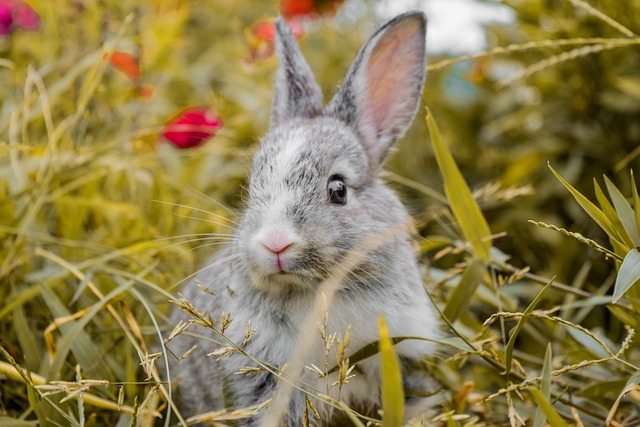
Other forms of life appear or reappear as well.  It’s special to see Canadian geese and the many other birds that return after having flown to warmer areas in the fall.  And to hear the great variety of birdsong.  And in the spring we get to see the newly born animals.  In the urban area where I live, I most often see squirrels and rabbits.

Spring is a special time to enjoy the outdoors and take in the fresh air and beauty of that time of the year.  As Rossette says, it certainly is a time when “life’s alive in everything.”

Acts of Kindness

“You cannot do an act of kindness too soon.”

This quote is by Ralph Waldo Emerson.  Emerson was an American essayist, lecturer, philosopher, minister, abolitionist, and poet who lived in the 1800s.

When I read Emerson’s quote, I was reminded of acts of kindness people have done for me, including this recent one:  I take a light rail train to and from work.  As I was walking toward the train platform, I saw that the train had arrived a couple minutes early and was waiting there.  I walked faster in the hopes of getting to it before it left.  There was a young man a ways ahead of me who was also walking toward the platform.  When he arrived at the train, he pressed the button to open the door and held it a few seconds for me to arrive there and enter the train.  I thanked him.  I assumed he too was going to get on the train, but he didn’t.  Once I was in, he continued walking down the platform.  He had held it to help me.

Gestures such as the young man’s are gifts.  He didn’t know me; I was one of many people in the city who don’t know each other.  But he decided he’d do something helpful for another person.  I wouldn’t have expected someone to do that for me, and if the train had left a minute early so that I would have needed to wait for the next one, that would have been an inconvenience but not a major one.  And yet his thoughtfulness—his act of kindness–added a special moment to my day.

All of us are able to add special moments to other people’s days.  Those small gifts can make a big difference for the persons who receive them, and they add to what is positive in our world.  And as Emerson says, such acts of kindness can never be done too soon.

I’m very thankful for all that is good and right and beautiful in our world.  But we all know there is also bad and wrong and ugly in our world.  Anything we can do to counteract that matters.