
Taking Personal Responsibility

“The capacity for growth depends on one’s ability to internalize and to take personal responsibility. If we forever see our life as a problem caused by others, a problem to be ‘solved,’ then no change will occur.”

This quote is by James Hollis from his book The Middle Passage: From Misery to Meaning in Midlife.  Hollis is a Jungian analyst, author, and speaker.  I have read several of his books and highly recommend them to you.

Taking personal responsibility is one of the qualities of being a mature person.  Being in the habit of blaming others is not.

As I write this, I am certainly aware that we are affected by the words and actions of other people, especially as children.  The way that children are treated by their parents, caregivers, teachers, and other adults certainly influences their personalities, abilities, and self-esteem.  That’s why it’s so important that children be raised in a nurturing environment.  And, of course, there are times when we as adults are affected by the words and actions of others as well.

What I appreciate about Hollis’ words is that, in order for us to become persons who change in positive ways, we need to focus on moving forward despite past negative influences—moving forward so that change can occur.  In some cases, including for those who didn’t grow up in a nurturing environment, meeting with a capable therapist can assist with the goal of taking personal responsibility for our lives.  I believe that Jungian-based therapy is the most helpful therapeutic approach in this regard.  What matters is that we do get started, because the change to which Hollis refers is what leads to living a more meaningful and purposeful life.  A life where we contribute to that which makes our world better for others as well as for ourselves.

It’s concerning that certain influences in our society encourage blaming and not being accountable.  There’s so much that is helpful and positive about the internet, but there are also websites and social media posts that do much harm.  They glorify blaming others, including attacking others verbally or cheering on people who do that.  Verbal attacks are more and more accepted it seems, to the detriment of all of us.

It’s also concerning that taking the easy route of seeing our life as a problem caused by others, to use Hollis’ words, is far too common.  And then staying stuck there.  It certainly can be true that one or more persons in our past treated us poorly.  But unless we make the effort to move beyond thinking of our lives only through that lens, we will not grow and change.  Taking responsibility for our lives can include acknowledging those past wrongdoings by others and then moving beyond them.

I’m not saying this is easy.  I am saying it’s well worth the effort.
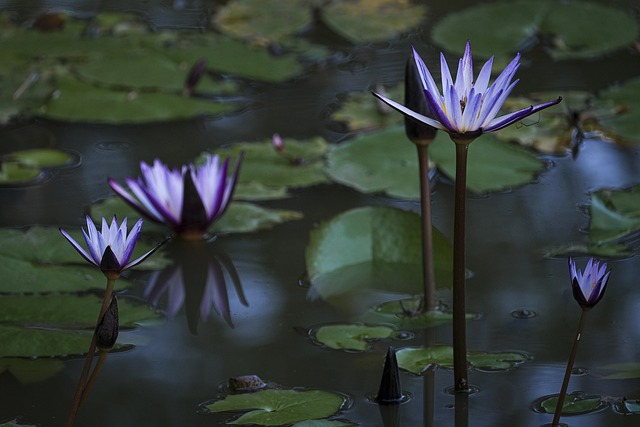
Being in Nature Heals and Strengthens

“Everybody needs beauty as well as bread, places to play in and pray in, where Nature may heal and cheer and give strength to body and soul alike.”

This quote is by John Muir, a naturalist and author who lived from 1838 to 1914.  He advocated preserving natural wilderness and has been referred to as the father of the National Parks.

Muir’s quote resonates with me because it contains words that reflect those aspects of life that comprise our emotional, physical, and spiritual well-being:  beauty, playing, praying, healing, cheerfulness, strength, body, and soul.  As Muir says, our connection to and spending time in nature can be a source of that well-being.

I definitely agree with Muir about the specialness and benefits of nature.  Additional sources of our well-being are art, dance, music, and theater.  They too add beauty, cheerfulness, and a sense of playfulness to our lives.  At times they are also a source of healing, such as when a person is feeling down and the arts contribute to him or her feeling better.  We can experience the benefits of the arts both when we attend performances or go to art fairs and museums where we take in the artistic talents of others and also when we do these activities ourselves.  I have friends who have continued to play musical instruments they learned when they were young, as I do the piano.  And sometimes people start learning to play musical instruments as adults just for the pleasure of doing so.  This is true of dancing, drawing, painting, singing, and being involved in community theater too.

And then there are the special relationships we have – with our spouses or partners, our children, our grandchildren, our friends, and others.  The quality time we spend with those we love certainly adds to beauty and cheer in our lives, and can also be a source of healing.

Muir also refers to giving strength to our bodies.  We take care of our bodies by eating nutritious food, getting sufficient sleep, avoiding unhealthy substances, and doing some physical activity each day.  Doing so not only benefits our physical health but also our mental and emotional health. As an older person, I recognize how fortunate I have been to have lived many years and to have had good health.  It’s one of the many things for which I thank our Creator each day.  I’m also aware that, because I am older, that will change at some point.  So I do what I’m able to to be healthy, and I encourage those who are reading this post to also take care of their health.

Muir also refers to prayer.  Having a quiet place and time for prayer each day is vital to our connection to our Creator.  Saying prayers from time to time throughout each day as we go about our responsibilities also adds meaning to our lives.  Prayers of thanksgiving, prayers for others, prayers for causes, prayers for our world and all the people and creatures with whom we share it.

Finally, Muir says nature may give strength to the soul.  Definitely!  And I would add that everything I’ve written about in this post nurtures our souls as well.  Discern the gifts you’ve been given and let them be part of caring for your soul.

Looking Within Ourselves

“What I am looking for is not out there, it is in me.”

This quote is by Helen Keller, a woman who when she was 19 months old had an illness that resulted in her becoming both blind and deaf.  With the assistance and companionship of her teacher, Anne Sullivan, Helen learned to read, write, and speak, and eventually she became a famous author, speaker, and philanthropist who positively affected the lives of many people.

When I read Keller’s quote, I thought about how her words apply to the Jungian psychology concept of individuation.  Individuation is the inner process where we grow in consciousness and become more whole.  It is directed by what Jung termed the Self, which is the larger reality that includes both the ego and the unconscious.  The guidance from the Self corresponds to that of our inner voice, which is a religious/spiritual term referring to the same reality.  It provides energy, creativity, strength, and direction to the ego.  The Self communicates to us in various ways, including through our intuition, synchronicities, unexpected happenings, and our dreams.  That’s why it’s important for us to pay attention when we experience these phenomena and then to try to discern their possible meanings and messages to us.

Having awareness only at an ego level is extremely limiting.  Looking “out there,” to use Keller’s words, too often leads to us being influenced by “societal should” messages and behaviors rather than to doing those actions that our inner direction is trying to help us to do.  What is “out there” means going along with the crowd rather than becoming the unique persons we were created to be.  Instead, when the ego has a relationship with the Self, we are able to grow in the qualities of courage, creativity, perseverance, ability to genuinely love, and many other virtues.  Having a relationship with the Self is the opposite of limiting.  It is life-giving and life-changing.

Therefore, as Helen Keller says, looking within ourselves is what we need to do.