Attentive and Caring Listening

In my work as a crisis line counselor, I’ve spoken with many people who called looking for help.  Some were grieving a loss, some were struggling with feelings of anxiety, some were worried about loved ones who had addiction problems, some were depressed.  In each case, they felt a need to talk to someone.  And the best help I could give them was to listen.  To listen without judgment and to give them my full attention.

It’s important for people in counseling-related fields to be good listeners.  It has been shown to be one of the most therapeutic things a counselor can do.  That has been borne out in my experience because often people who called told me it meant a lot to them that I gave them the opportunity to express how they were feeling.  Sometimes they chose to call a crisis line because they didn’t feel comfortable talking with someone they knew, either not wanting that person to worry about them and in some cases being concerned the person might not maintain confidentiality.  And sometimes the person who called had a counselor, but it helped them to talk to someone for a few minutes between their counseling sessions.

Being good listeners doesn’t apply only to people in the helping professions.  It’s something all of us should endeavor to be.  It’s one of the best things we can do in any of our relationships—with our spouse or partner, our children, and other people we care about.  Too often when someone is talking to us, instead of giving our full attention to that person, we’re thinking about what our response will be or what we plan to do when the conversation is over.  It takes practice and a willingness to share some time with another person in order to be a good listener.

Although in this post I’ve focused on listening to others when they’re struggling with problems, giving people our full attention is a wonderful gift in other situations too.  Listening as children tell us about something they did or observed adds to their feeling good about themselves because we show them we value what they want to share with us; listening to elderly persons talk about how their day went acknowledges that their lives matter even as they’ve needed to adjust to the changes that growing older brings; listening to coworkers helps them feel better about the work they’re doing; listening to our spouse or partner conveys our love for them.  These are a few of the many ways that being listened to makes a difference in people’s lives.

Attentive and caring listening is a valuable quality for anyone to have.  There’s no question this world would be a better place if more of us would prioritize and embrace that quality.

Be Watchful of Ego Desires

“Remember that sometimes not getting what you want is a wonderful stroke of luck.”

This quote by the Dalai Lama is one we should keep in mind as we travel through our life journey.  For me, it’s a reminder that we do not always know what is best for ourselves, but the Creator does.  It may very well be that something we hope for is not part of our individual path and would lead us away from the direction we were created to follow.

The Dalai Lama’s words serve as a reminder to be watchful of our ego desires.  Those are desires we have at the conscious, thinking level.  According to Jungian theory, our ego consciousness is just one part of our psyche; in fact, a rather small part.  Our psyche also includes the personal unconscious which has a significant influence on our behavior and reactions.  And we are further influenced by the collective unconscious, which is the part of the psyche that is derived from experiences and memories we have in common with all humankind.

When I point out the importance of being watchful of our ego desires, I do so with the intention that we keep in mind there are more influences that affect our decisions and actions than those of which we are consciously aware.  Once again it’s important to do our best to pay attention to our dreams, synchronicities, and intuition as we make decisions.  For it is through them that contents from the unconscious can become part of our consciousness.

An example from my life is the decision I made to move to a large city 24 years ago.  I had grown up in a small town, had gone to college in a small city, and had been working in a different small city after graduating from college.  I had never had a desire to live in a large metropolitan area.  But because of dreams, including one where some women were packing my belongings, and because of an intuitive sense that it was what I was supposed to do, I made that move.  At the more conscious level, I knew that my daughter would be able to receive higher quality instruction to develop her talents and that I would be able to earn a higher income.  But it was the dreams and intuitions, and the sense it was the Creator’s will, that gave me the motivation and the courage to make the move.  And 24 year later I still know it was what I was supposed to do.

By not getting what I thought I wanted of continuing to live where I had been living, I have received so much more.

Doing What Is Best for Us to Do

“Most of us have two lives.  The life we live and the unlived life within us.  Between the two stands Resistance.”  This quote is by author Steven Pressfield and appears in his book The War of Art:  Break Through the Blocks and Win Your Inner Creative Battles.

In his book, Pressfield writes about the nature of resistance, including the many forms it takes.  He capitalizes the word “Resistance” throughout the book, signifying the considerable influence it has on each of us.  Although, as the subtitle indicates, Pressfield emphasizes how resistance makes it difficult for us to access and express our creativity, he also points out how it makes it more difficult for us to work toward any types of goals.  It gets in the way of our resolution to spend more time with our children, to eat more nutritiously, to start or continue an exercise program, and so on.  Its goal is to keep us from succeeding in endeavors that make our lives more purposeful.  It is often successful in doing this because, as Pressfield says, in order to overcome resistance, we must be willing to do the work.  And too often we don’t want to do that.

One of the ways resistance affects me is in writing posts for this blog.  It’s that voice in my head that says I cannot come up with an idea to write about and/or many people have already written about so and so and/or I’ll probably have an idea tomorrow so I won’t write today and/or who am I to think I have anything to contribute by writing a blog?  That’s how resistance works; it gives us all kinds of reasons not to do what it would be best for us to do.  When I say “best for us to do” I’m referring to doing those things that we were created to do, those things that we have discerned by trying to listen to our inner voice.  That’s the voice in our heart rather than the voice in our head.

No one said following our inner guidance is easy, although there are times when it’s as if the universe does give us unexpected help to do that.  Following our inner direction requires that we do the work, make the effort.  It means we set aside our ego desires to do the things that have value.  That we recognize the many forms resistance takes, acknowledge its presence, make the choice to ignore it, and then do what we know is best for us to do.

I encourage you to read The War of Art.  As a friend of mine said, it’s a jewel of a book.  I agree.

Being Thankful for the Little Things 

“Enjoy the little things, for one day you may look back and realize they were the big things.” –Robert Brault

Something I enjoy doing is taking a walk on the trail that is near my home.  It goes around a small lake and is about a two and a half mile walk.  I took that walk this afternoon, and shortly after I started out a light snow began to fall.  It was very pretty and peaceful.

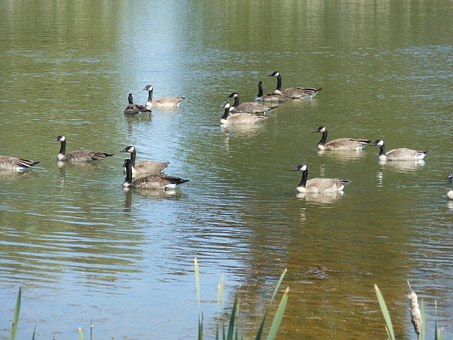
I can usually fit in taking this walk around the lake two or three times a week.  In addition to walking being a way to help maintain my health, I enjoy being outside, breathing in the fresh air, seeing the lake and trees and sky, and also seeing whatever animals might appear.  There were a lot of Canadian geese on the lake as well as some flying overhead.  I thought about how those on the lake are probably making a stop before heading south again.  I also saw some squirrels and a rabbit today.

Often when I’m taking a walk, I find myself giving thanks for my ability to do this.  When we are healthy, it can be easy to take for granted our ability to do many of the things we routinely do each day—including being able to walk.  I recently met a young woman who cannot walk and has needed to use a wheelchair since early childhood.  She has adapted well and I’m impressed with all she does despite that limitation.  I hope if I ever lose the ability to walk, I will accept that and adapt to it also.  But seeing her reminds me of one of the many things for which I am thankful.

It also brings to mind the quotation by writer Robert Brault which I put at the beginning of this post.  His reminder to “enjoy the little things” applies to a great many aspects of each of our lives.  Each of us should take a few minutes every day to think about and say a prayer of thanksgiving for the many abilities we have been given.

Appreciating Illustrators of Children’s Books and Their Creations 

I recently read the children’s picture book Melvin and the Boy, written and illustrated by Lauren Castillo.  One of the many special things I experienced while raising my daughter was reading to her when she was young.  She is an adult now and living on her own, but I continue to reserve children’s books at the library from time to time to read myself.  In addition to enjoying the stories, I like looking at the illustrations.  The talent and creativity of the illustrators and the various styles of art are impressive.  The illustrations not only reflect the story but also supplement the story.

Melvin and the Boy is an excellent example of storytelling where the illustrations both reflect the story and add to the reading experience.  I won’t tell you the story because I want you to read and enjoy it yourself, except to say a young boy needs to deal with a disappointment and make a decision.  The artwork of course shows the boy and the turtle whom the boy named Melvin, the park, and the boy’s parents who are part of the story.  But in addition the pictures show more than what the words of the story say.  The story doesn’t say the parents are concerned, but the illustrations show the parents’ facial expressions of concern and affection for their son.  The story doesn’t say in words that the parents love each other, but the fondness they have for each other is shown by their holding hands while walking together and in other ways.  And the story doesn’t directly have the parents tell their son they’ll be there for him whatever his decision, but the illustration of the boy walking home with his parents on either side of him at the end of the story makes that clear.

So in addition to hearing the words of the story, which are special in themselves, children seeing the illustrations of positive, accepting, and loving ways people interact is bound to have an influence on them.  These are such important qualities for each of us to have toward others, and it’s never too early for children to see examples of them.  Yet another reason to read to the children in our lives.  And to appreciate the books as adults as well.

Falling Back on a Greater Hope 

“Naturally, when we are up against a difficult situation we hope it will end. We hope we or our friends or family will recover from the illness, that the world situation will improve, that business will get better.  But we must be prepared to fall back on a greater hope:  that no matter how things work out there is a Reality behind it all in which hope can truly be grounded.”  This quote about hope is from Jungian analyst and author John A. Sanford’s book The Strange Trial of Mr. Hyde.

I chose the theme of hope for my blog because having hope is essential, especially during those times when answers aren’t clear.  There are times when things go along smoothly, we carry out our day-to-day routines, and we have enjoyable times with people we care about.  But at other times we are faced with challenges which require us to try to discern how best to approach them.  Life’s challenges vary in level of seriousness, in what and whom they affect, and in the degree to which we have control over resolving them.

Especially during those times when we have little or no control over the outcome of a situation, such as when something emotionally painful happens and we’re in the midst of experiencing that pain, we need to put our hope in the Creator.  As Sanford puts it, we need “to fall back on a greater hope.”  As mere human beings, we cannot know the Creator’s plan for how and why certain things happen, but having trust in that Reality will help us through those difficult times.

I’m thankful for the gift of faith, but I know it can be tested.  As much as part of me doesn’t want to have to experience distressing and sorrowful things, trusting that the Creator knows far better than I helps me undergo life’s difficulties.  I know from experience that the often quoted saying “This too shall pass” is true.  And that our Creator is with us as we go through the dark times as well as when we once again step into the light.

Following God’s Plan and Destiny for Us 

“We’re facing dragons too.  Fire-breathing griffins of the soul, whom we must outfight and outwit to reach our self-in-potential and to release the maiden who is God’s plan and destiny for ourselves and the answer to why we were put on this planet.”

This quote by author Steven Pressfield appears in his book The War of Art.  In my posts I often emphasize the importance of endeavoring to become the person we were created to be; in Jungian terminology, to work toward individuation.  Pressfield’s analogy comparing this striving to that of a knight facing dangers is yet another way of emphasizing the nature of this inner work.  And just as knights of old were courageous, used their wits, and persevered in order to rescue the maiden, we need to have those qualities in order to live a meaningful and purposeful life, which is what the maiden symbolizes.

Pressfield’s use of the words “our self-in-potential” is fitting, for embracing the challenge of trying to become the persons we were created to be is a continuous, life-long process.  Our potential is that which we are able to do because of the abilities and talents we have been given.  We discover more about ourselves along the way—our courage and at times our lack of courage; mistakes we make but also how we are able to learn from our mistakes; and feeling peaceful when we are following our path but also forgiving ourselves for the times we haven’t, and trying again.

Pressfield states his belief that God has a plan and destiny for each of us.  Each of us is a unique creation who was given the gift of life, a gift we should value every day.

Faith

“To hear with my heart.  To see with my soul.  To be guided by a hand I cannot hold.  To trust in a way that I cannot see.  That’s what faith must be.”

These words are from Michael Card’s song entitled “That’s What Faith Must Be.”  Mr. Card is a Christian singer-songwriter, musician, author, and radio host, and he wrote this song early in his musical ministry.  I appreciate the simple and yet profound way he describes faith.

Each of us has a heart and a soul given to us by our Creator.  For me, hearing with our hearts is listening to our inner voice, trying to discern its guidance for each of us as unique individuals with unique callings.  And seeing with our souls is our noticing and being thankful for that guidance as it comes to us through our intuition, dreams, and synchronicities.  And also through people in our lives and our interactions with them; our surroundings, including the beauties of nature; and the ways we choose to spend time.

Faith involves living according to truths that cannot be readily proved or concretely set forth.  It is trusting in our inner guidance and trying to follow that guidance without knowing where it will lead us; thus, trusting in a way we cannot see.  There are times when the choices we make as we try to live by faith are not understood or accepted by other people, including people we are close to.  Despite the discomfort or sadness this may cause, we continue on because we know in our heart and in our soul it is how we should live.

Loved Ones Are Always with Us

Yesterday I was sitting in a chair facing a large window and looking outside while talking to a friend on the phone.  The bright red of a cardinal caught my eye as it flew and then perched on the branch of a nearby tree.  About two seconds later, a female cardinal arrived and alighted on a branch a few inches from the male cardinal.  Although it is my understanding that cardinals live year round in the area where I live, I rarely see them, which made this special.  It was special too that they stayed in the tree for several minutes so I could enjoy watching them.

I appreciate life’s small surprises, and this was one.  When birds catch my eye, in addition to the enjoyment of seeing them, I also think of the symbolism of birds in dreams:  they symbolize the soul.  When we are reminded of our soul, we are reminded that we were created by the Creator, and for that reason each of us matters and we are loved.  And also that we need to try to discern the purposes for which we were created by listening to our inner voice and endeavoring to live according to its guidance.

Seeing the cardinals and noticing how they remained several minutes before flying away made me curious to learn the symbolism of cardinals in particular.  By doing some research, I learned that cardinals are believed to be representatives of loved ones who have passed away, and that their presence shows us that they are always with us.  Learning this touched my heart, because my mother passed away about a month ago.  I also had the thought that perhaps the other cardinal represented my father, who passed away 14 years ago, stopping by to show me he is with me too.

Loved ones are also with us in our memories.  I’m thankful for memories I have of times with my parents and with other people I have known who have completed their earthly journeys.

A Time for Every Matter under Heaven

“For everything there is a season, and a time for every matter under heaven:  a time to be born, and a time to die; a time to plant, and a time to pluck up what is planted; a time to break down, and a time to build up; a time to weep, and a time to laugh; a time to mourn, and a time to dance.”  Ecclesiastics 3:1-4.

These words in the Old Testament reflect the various aspects of life.  Each of our lives is made up of many kinds of experiences and the emotions we feel as we live those experiences.  Recently a good friend of mine became a grandmother and sent me photos of her beautiful infant granddaughter.  A time to be born.  And a time of joy.  A month ago my mother, who was blessed with a long life, completed her earthly journey.  A time to die.  And a time for those of us who knew and loved her to feel the sadness of missing her but also to be thankful that we were able to have her in our lives for as long as we did.

There are times when we have many tasks to complete and deadlines to meet, and we feel a lot of pressure.  And when we’ve completed those tasks, we welcome being less busy and hopefully we are able to enjoy the feeling of satisfaction of a job well done.  There are times when we are ill and it is essential to slow down and take care of ourselves in order to be well again.  And there are times when we are healthy and energetic and lighthearted.

Life brings joys and sorrows.  There are times of activity and there are times of quiet contemplation.  Times to enjoy being with others and times when being alone is what we need.

Our life journey involves all of these facets.  In order to live a more meaningful life, it’s important that we live life fully by embracing each of them.