Our Journey

lush green forest

The other day something came to mind that I hadn’t remembered for many years. My first job after graduating from college was teaching at a middle school. One of my students was expressing frustration with another student who had called herself “lucky” because something positive had happened to her. The student who was frustrated told the other student that people are not lucky when positive things happen, but instead they are blessed; that God causes good things to happen and those good things are blessings. The first student argued that it didn’t matter which word she used and she would use the word she wanted to. It was hard for the frustrated student to let it go. She felt so strongly about it she kept trying to convince the other student to change her way of thinking.

Remembering witnessing this interaction between the students reminds me of how each of us is on our own journey. And along the way each of us has been and continues to be influenced by other people and experiences. I remember the student who felt adamant about using the word blessed rather than lucky had parents who talked openly about their religious faith. It’s likely that her parents emphasized to her and her siblings the difference between being blessed and being lucky and naturally she was influenced by them. Some people would say it’s semantics. Some people would say when they say lucky, they believe luck is a gift from God. Some people would say they don’t believe in a higher power but they have times when they feel lucky. And so on.

We’re all on our journeys. What matters is that we change and grow along the way.

Day by Day

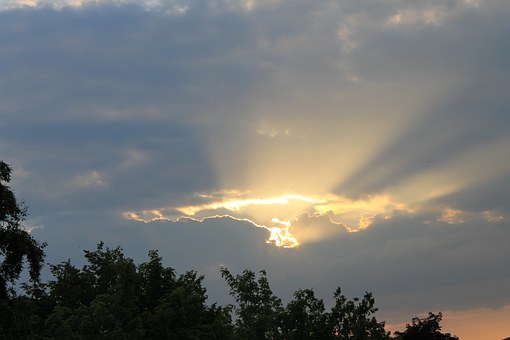
twilight time

I like the simplicity and beauty of this prayer:

Day by day,
Day by day,
Lord, Dear Lord, three things I pray:
To see thee more clearly,
Love thee more dearly,
Follow thee more nearly,
Day by day.

The melody of the song that was created with the words of this prayer has been “playing in my head” recently–a prompting perhaps to write about it in my blog.

The words “day by day” remind me both that each day of our lives matters and also that how we choose to live each day matters. The choices we make, the actions we do, how we spend the time we are given. The words “To see thee more clearly” bring to mind the idea of hearing our inner voice that guides us–sometimes it is clearer than at other times. It is important that we strive to hear it because in doing so we will “see more clearly” what we are to do.

When we love our Lord more dearly, we become more able to love other people and to show that love through our interactions with them. We also become more able to love ourselves. To “follow thee more nearly” makes me think about trying to follow the teachings and examples of Christ and also about the Jungian idea of becoming more conscious which is what makes it possible for us to be more the person we were created to be.

Doing Nothing Is the Wrong Choice

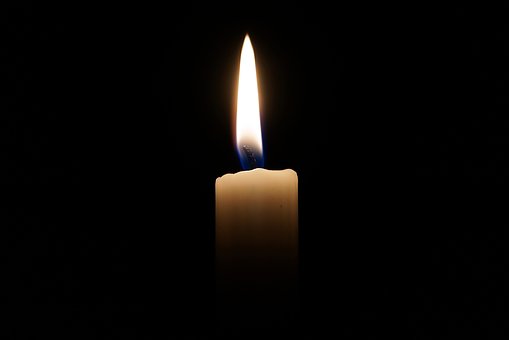
candle light

I respect Mahatma Gandhi because he lived what he said. One of the things he said is “You may never know what results come of your actions, but if you do nothing, there will be no results.” I sometimes become disheartened when I read news stories about people who suffer because of other people’s injustice, violence, and greed. And I question whether there really is anything I can do to help. Thankfully, I have the belief that no matter how much is wrong in the world there is also a great deal that is right. There are many instances where there is justice and nonviolence, and where much is being done to benefit others.

Sometimes it works out that we see the positive results of something we have done and that, of course, is a special experience. It’s important when that happens that we keep in mind our ability to do whatever positive thing we did was a gift and to have a humble and thankful attitude about it.

But what I especially like about Gandhi’s words is that what we do matters whether we have the opportunity to see the results or not. What matters is that we make the effort, that we give of ourselves because we care. What matters is that we keep in mind that doing nothing is the wrong choice.

The Gift of Life

green grass

Here is another excerpt from Dr. Terry Chitwood’s book How to Defend Yourself Without Even Trying: “It is important to remember that it is the power of the universe that nourishes your spirit and keeps you alive. Without that energy, your breath would cease. It is a gift to live even for another moment. Show your respect for your gift of life by only using your power for the benefit of mankind and not for personal gain.”

In our busy lives, as we go from task to task, be it at work, at school, raising children, and so on, it is easy to forget the miracle of our existence. That we did not create ourselves and give ourselves life. And we do not sustain our lives. I appreciate how Dr. Chitwood expresses these truths.

And I appreciate his reminder about using our gift of life to benefit others rather than for personal gain. Modern western culture emphasizes personal gain. We see it in movies and TV programs, advertisements, all kinds of media. It is not uncommon for people who focus only on themselves to feel empty. It is people who use their gift of life to help others, especially when they’ve been able to discern their unique purpose, who find a sense of fulfillment.

It’s the Journey that Matters

early morning forest scene

An elderly man who I cared about very much passed away about ten years ago. He had cancer and during the last few months of his life he was bed-ridden. Once when I was visiting him, he told me he wondered why God designed life so that people grow old and die and at the same time babies are born. And the babies, as they grow, need to go through life experiences and learn the many things that the person who has died spent all those year experiencing and learning. My friend said he wondered why God doesn’t just let people who are already here continue to live and not have more people be born who then have to start from the beginning. I’m sure my friend was feeling sad that he would be leaving his wife of many years, that he would no longer be here to help her and be her companion. And perhaps he was starting to grieve the ending of his life on earth.

Later when I thought about what my elderly friend had said, the thought “It’s the journey that matters” came to me. The creator has created each of us and put us on this earth, and we are given the opportunity to make choices and act on those choices as we live each day. It has been my experience, and I believe the experience of most people, that the right choice in a given situation isn’t always obvious, and we need to try to discern the Creator’s will for us. Sincerely making that effort is also part of the journey, as are realizing when we’ve made a mistake, doing our best to accept challenges, and trusting that the Creator is always with us. By trying to live in this way, each of us will know we tried our best as we’re nearing the end of our earthly journeys.

Nonattachment

Clouds above the mountains

An author whose books have meant a lot to me is Terry Chitwood, a Jungian psychotherapist and writer. In his book How to Defend Yourself Without Even Trying, Dr. Chitwood says this about nonattachment: “Everything in this world changes. To resist change is useless and time-consuming. In order to live effortlessly and happily, you need to flow with your changes. The only other choice is suffering.”

When I think of “flowing with my changes,” I’m reminded of those times when what I was doing felt exactly right and as if it was being supported by the universe. What I was doing wasn’t based on choices my ego made but rather was my ego being in the service of a presence larger than it. As much as I believe that, based on my personal experience and reading, trying to discern life direction from dreams and synchronicities is essential to living a meaningful life, I often have to deal with my resistance when the direction I discern requires making changes. There is that part of me who wants to hold on to the familiar. And holding on, of course, is the opposite of nonattachment.

And yet each time I recognize my resistance and, in spite of it, try to follow the direction I’ve been given, it feels right again. And I am given the gift of flowing with my changes.

Being Thankful

water fall

Sometimes before I go to sleep at night I have the thought that I was given the gift of living another day. One cannot know which day will be his or her last one of this earthly journey. Or whether this day will be the last day he or she doesn’t have a serious illness or isn’t disabled in an accident. I don’t mean to sound melodramatic or pessimistic. I mean to be thankful. And I am thankful for each day I get to walk and pray and think and work and interact with people and love others, and do many, many more things that are so easily taken for granted. There is much to be thankful for. And if a serious illness or disability happens, I pray I will have the courage and peace that our Creator gives to do my best to live with the challenge. And to continue to be thankful for all that I have.

We Are All Interconnected

candle light

There is a story called the “Allegory of the Long Spoons.” This parable is attributed by many to Rabbi Haim of Romshishok and, although there are variations to how it is told, here’s the basic story: A man asked God what heaven and hell were like. God showed the man a room where many people were seated around a large table and in the middle of the table was a big bowl of delicious, aromatic stew. But the people sitting around the table were sickly, thin, and miserable. Everyone around the table was holding a spoon with a very long handle and was able to take a spoonful of the stew, but because the spoon handles were longer than their arms, no one was able to put the stew in his or her mouth. God told the man, “This is hell.”

Then God showed the man a different room where again many people were sitting around a large table that had the same delicious stew in a big bowl in the center and all were holding the same type of long-handled spoons. But in this room the people were healthy, well nourished, and happy. For in this room, the people were reaching the spoonfuls of stew across the table and feeding each other. God told the man, “This is heaven.”

I first heard this allegory a few years ago and I love how it says so much in just a few words. I have read that this story is present in many cultures and referred to by many religious traditions. My work as a crisis line counselor includes giving callers resource information when I believe it could benefit them based on what they have shared with me in our call together. Although I’m impressed by the many organizations and religious institutions that have programs that help many people, I’m also concerned that there are a lot of people who don’t appear to care about helping others. The allegory of the long spoons portrays love, caring, and the interconnectness of people. We need one another. We need to use the abilities the Creator has given each of us to honor this interconnectedness.

The Gift of Humility

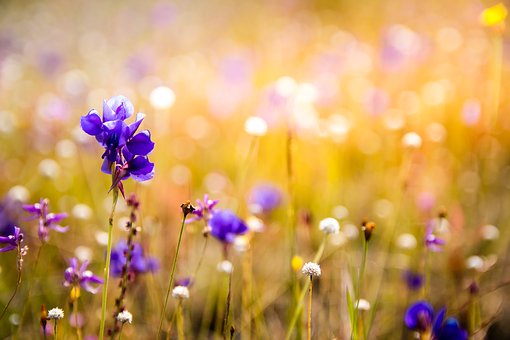
white flowers

In his book Meeting Force With Silence, author and Jungian psychotherapist Dr. Terry Chitwood writes, “If you are fortunate, you have already been gifted with humility. Treasure this gift.” It is so easy to take things for granted, including positive qualities such as humility. To live honestly we need to recognize that our creativity, intellectual ability, talents, accomplishments, health, and the many other attributes that make each of us a unique person, a unique creation, are gifts from the Creator. And for those of us who put effort into improving ourselves, such as by having the discipline to do what is needed to develop a talent we’ve been given or to do physical exercise regularly to maintain and improve our health, we need to recognize that that discipline is also a gift from the Creator.

Dr. Chitwood also writes “Humility is a necessity, not a virtue.” If our egos are lacking humility, they do not recognize a power greater than themselves. This is unnatural, and at some point the universe will try to correct such inflated egos by requiring them to go through painful experiences. Having humility is necessary in order for us to recognize and honor the source of our being. And by being humble we are better able to be thankful for all that we have been given.

Let It Be

This morning as I was getting ready for work, my mind was occupied with a decision I need to make. I kept going over scenarios and was feeling some stress because it wasn’t clear to me yet what the answer was. Then the words and melody of the Beatles song “Let It Be” came into my thoughts: “Let it be, let it be, let it be, let it be. There will be an answer, let it be.” I realized it was time to stop thinking about what was concerning me for now, to “give it a rest,” so to speak. The words of the song were also a reminder that there will be an answer.

The song “Let It Be” presented itself to me; I didn’t consciously bring it to mind. Hearing those words and that melody helped me to remember to be open to answers that come from within. In our culture reasoning and logical thinking are emphasized. Although these abilities are useful in certain situations, the answers to personal problems come from the creative, intuitive part of oneself. They are the answers that come from the heart, not from the head.