Our World Needs More Kindness

“Let no one ever come to you without leaving better and happier. Be the living expression of God’s kindness: kindness in your face, kindness in your eyes, kindness in your smile.”

This quote is by Mother Teresa who exemplified what she suggests we all do—be kind to others.

I have found that small gestures of kindness can have a big impact, both for the person who is the recipient of them and for the person who is showing kindness.  Thankfully, many of us recognize the importance and positive effects of being kind to others.  Ideally, those who do not will change, for our world needs more kindness.

When I was walking on a nature trail recently, a woman who appeared to be around my age was walking toward me from the other direction.  We smiled at each other and noted what a pretty evening it was.  It was a short interaction, and it was a nice addition to the peaceful evening.  It can also be an act of kindness to notice when a person chooses not to make eye contact and to not interact.  When that happens, I believe it shows caring to not say anything and instead to respect what seems to be their wish to have silence at that moment.

The other day when I was a few feet from the entrance of the building where I work, a young man who I do not know waited for me to arrive and held the door open for me.  We smiled at each other as I said thank you.  Another simple act of kindness that made the day nicer for both of us.

Our world needs more kindness.  News stories and other media show people being unkind to others—insults, racial slurs, road rage incidents, threats, bullying, etc.  And people on certain websites and social media cause great harm by the terrible things they say.  One of the best ways we can counteract the harm they cause is by following Mother Teresa’s words each day.

The more each of us does to add to that which is right and good, including acts of kindness, the better each day of life will be for all of us who share this planet.
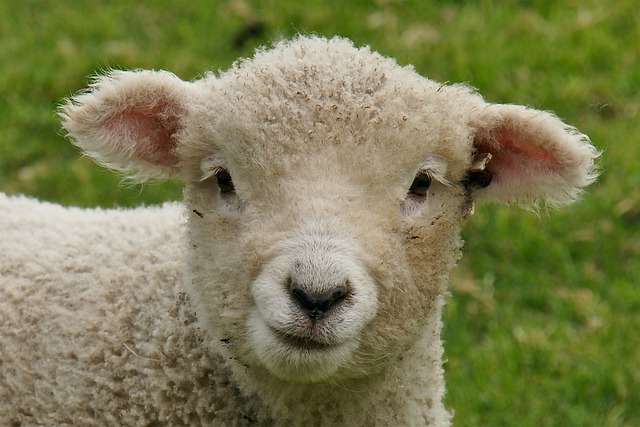

Children and Healing

“The soul is healed by being with children.”

This quote is by Fyodor Dostoevsky, a well-known Russian novelist, essayist, and journalist who lived in the nineteenth century.

Reading Dostoevsky’s quote brought back memories of my daughter when she was a child.  I’m very thankful that I had the special gift of having a child, caring for her, and being with her during her childhood and adolescent years.  And I’m also very thankful that she is a wonderful part of my life now that she is an adult.

It’s really quite fascinating to see how children grow and change and become their unique little selves.  The first time they make eye contact, their first smile and how that smile and the many smiles that follow touch our hearts.  Before we know it, children have reached the developmental milestones of crawling, walking, talking, and many others.  They’re little miracles.

As I write this post, I’m aware of people wanting to have children but for various reasons not being able to or deciding it was better not to.  Although I refer to my experience as a parent, I also take joy in the children and grandchildren of friends, relatives, and coworkers who share photos of them and talk about how they’re doing.

One of the reasons Dostoevsky’s words resonate with me is that there is a kind of healing that accompanies our being in the present moment, and young children are perfect examples of living in the present.  It’s not until they’re older that life experiences, including modeling by parents and other adults, start to cause them to think about the past or the future.  For all of us as adults there are of course times when we must think about the future, such as for work projects or making plans for something.  And thinking about the past, especially having positive memories, can be good for us.  But when we find ourselves always or almost always thinking about what’s next instead of appreciating the present moment, our enjoyment of life is diminished.  And when we dwell on the past, including sad memories, mistakes we made, or regrets, it’s important for our emotional well-being to remind ourselves to focus on what is happening now instead, what we can do that is helpful for others and for ourselves, and in general using the gifts we’ve been given in ways that matter.

Another reason Dostoevsky’s words are meaningful to me is that in Jungian dream interpretation a baby appearing in a dream can symbolize new life, a new beginning, and being open to transformation.  Our dreams are one of the ways we are given information from our unconscious which can then be integrated into our consciousness, and to receive the message symbolized by a baby is certainly positive and hopeful and part of our soul work.

All of our souls need healing from time to time.  Experiencing the joy of being among children can be part of that healing.

Meaningful Coincidences

“Coincidence is God’s way of remaining anonymous.”

This quote is by physicist Albert Einstein, a man who is well known for his many discoveries in physics and related fields.

Einstein’s words make me smile.  To me, his description of coincidence is a light-hearted way of saying that our Creator knows all that happens in each of our lives.  The Oxford Dictionary defines coincidence as “a remarkable concurrence of events or circumstances without apparent causal connection.”  When we experience a coincidence, when something happens that causes us to say “What are the chances that that would have happened,” it can serve as a reminder of the presence of our Creator in our lives.

About two years ago I had such an experience.  I had lived in an apartment for many years and I was a good tenant.  So I was surprised when I received a notice of nonrenewal.  However, the notice also included an invitation to continue to live at the apartment complex but to move into a different apartment there.  The owner was having all of the apartments in the complex renovated and wanted to complete those that hadn’t been done yet within the next few months.

I was busy with my full-time job, with taking care of my grandson one day a week, and with many other commitments.  So doing all that is involved to prepare for and make such a move was something I certainly hadn’t wanted to do at that time.  But when I spoke with management, I was told that staying in my apartment was not an option.

When I told my daughter and son-in-law about my situation, they told me they would like me to live closer to them.  Although I was and am with them and my grandson often, I hadn’t thought about moving to be nearer to them before.  But when they suggested it, I immediately liked that idea too!  So I found and moved to an apartment that is just three miles from them.

I believe that this coincidence of unexpectedly needing to move and my daughter and son-in-law wanting me to live closer to them was part of God’s plan for me.  Being required to move out of my apartment led to changes that I’m very happy about.  Among them are that, in addition to the convenience and time savings of a much shorter drive to be with my loved ones, I like my new apartment better than where I lived before.  I’m thankful for the “push” our Creator gave me to make this change.

Of course, we all experience coincidences that are smaller in scope than the experience I’ve shared with you in this post.  Large or small, coincidences often have the potential to lead to positive experiences in our lives.  And often, to use Einstein’s words, they are caused by our Creator “anonymously” helping us as we take the steps of our earthly journeys.


Love, Time, Attention 

“I may not be able to give my kids everything they want, but I give them what they need:  love, time, and attention.  You can’t buy those things.”

This quote is by author Nishan Panwar.

I have experienced the wonderful gift of raising and loving a daughter who is now in her mid-30s.  And now I am experiencing the wonderful gift of being with and loving a grandson who is two years old.  Nishan Panwar’s quote certainly applies to parents, but it also applies to others of us who have close relationships with children.

I remember when my daughter was a child how special it was to see her attain each milestone:  smiling, crawling, taking her first step, saying her first words.  And also seeing what caught her attention, what toys she chose to play with or books to look at, what caused her to smile and to laugh.  Being able to observe the many aspects of her being a unique little creation.

As is the case with most adults, I needed to work, and therefore I was with my daughter less often than I would have liked to have been.  But when I was with her, I valued being able to give her the love, time, and attention of which Panwar speaks.  For, as he says, those are what matter most.

Interacting with children in a loving way is essential for them to thrive, to feel secure, and to sense that they matter.  Being loved enables children to have a positive self-concept, which can be the foundation not only for a good relationship with their parents and other caregivers but also for having good relationships with others as they grow older.

Time can be hard to come by in many people’s busy lives.  In order to have time to spend with our children, we most likely need to decrease the amount of time we spend doing things we enjoyed doing before having children.  In other words, to adjust our priorities.  The time we devote to being with and interacting with children is an essential part of nurturing them.  And we also gain by being with them.

When we are with our children, we need to give them our full attention—listening to what they say and responding, and thereby letting them know that we value what they are sharing with us.  It’s important to set aside distractions as much as possible and to be fully present with them.  I realize as I write this that this can be challenging at times, depending on what other things are going on in our lives—we can just try to do our best.

As I was when my daughter was a child, I’m thankful for being able to experience the joy of seeing my grandson grow and change, be active and interested in things.  And I again have experienced and continue to experience having a special relationship with a child and doing my best to add to what is positive in his young life.

Children will thrive when we give them what they need:  love, time, and attention.  These are wonderful gifts for us to give to the children in our lives.

Spring – The Promise of New Beginnings

“Spring is when life’s alive in everything!”

This quote is by Christina Rossette, an English poet who lived in the 1800s.

I like the change of seasons.  Where I live, the winters are cold and often there is snow, and then it’s the opposite in the summer when temperatures frequently reach the 80s and 90s.  Even though I like aspects of all four seasons, I especially like spring.  In addition to enjoying the temperatures being mild and the sunlight lasting longer after the short days of winter, I like how spring brings with it the promise of new beginnings. Trees and bushes, after being dormant and leafless during the cold months, gradually leaf out.  First there’s just a hint of green, then leaf buds appear, and before long the branches are full of beautiful green leaves of various shades, shapes, and sizes.  And there are the colorful early spring flowers, including tulips, daffodils, and lilacs.

Other forms of life appear or reappear as well.  It’s special to see Canadian geese and the many other birds that return after having flown to warmer areas in the fall.  And to hear the great variety of birdsong.  And in the spring we get to see the newly born animals.  In the urban area where I live, I most often see squirrels and rabbits.

Spring is a special time to enjoy the outdoors and take in the fresh air and beauty of that time of the year.  As Rossette says, it certainly is a time when “life’s alive in everything.”

Acts of Kindness

“You cannot do an act of kindness too soon.”

This quote is by Ralph Waldo Emerson.  Emerson was an American essayist, lecturer, philosopher, minister, abolitionist, and poet who lived in the 1800s.

When I read Emerson’s quote, I was reminded of acts of kindness people have done for me, including this recent one:  I take a light rail train to and from work.  As I was walking toward the train platform, I saw that the train had arrived a couple minutes early and was waiting there.  I walked faster in the hopes of getting to it before it left.  There was a young man a ways ahead of me who was also walking toward the platform.  When he arrived at the train, he pressed the button to open the door and held it a few seconds for me to arrive there and enter the train.  I thanked him.  I assumed he too was going to get on the train, but he didn’t.  Once I was in, he continued walking down the platform.  He had held it to help me.

Gestures such as the young man’s are gifts.  He didn’t know me; I was one of many people in the city who don’t know each other.  But he decided he’d do something helpful for another person.  I wouldn’t have expected someone to do that for me, and if the train had left a minute early so that I would have needed to wait for the next one, that would have been an inconvenience but not a major one.  And yet his thoughtfulness—his act of kindness–added a special moment to my day.

All of us are able to add special moments to other people’s days.  Those small gifts can make a big difference for the persons who receive them, and they add to what is positive in our world.  And as Emerson says, such acts of kindness can never be done too soon.

I’m very thankful for all that is good and right and beautiful in our world.  But we all know there is also bad and wrong and ugly in our world.  Anything we can do to counteract that matters.

The Price of Inaction

“The price of inaction is far greater than the cost of making a mistake.”

This quote is by Meister Eckhart, a German theologian, philosopher, and mystic who lived from 1260 to 1328.

In several of my posts I have written about the importance of not being afraid to make mistakes.  Making mistakes is a natural part of being a human being.  But I have to admit that I often need to remind myself of this because I, like most people, don’t like to make mistakes.  I think I feel that way because I want to appear knowledgeable and capable to others and to myself.  Perhaps quotations on this topic catch my attention because it is something I need to be better at accepting.

Being too concerned that we might make a mistake holds us back from moving forward in our lives.  When we are too cautious, we limit our ability to add to what we know and to what we know how to do.  We miss out on having new and meaningful experiences.  These and other missed opportunities are the price of inaction to which Meister Eckhart refers.

Here’s an example from my life:  Some years ago, I was asked to supervise new employees at the crisis line where I was working.  I had worked as a crisis counselor there for a few years and therefore I was familiar with doing that work, for I had spoken with numerous people who had called for assistance and I had completed many training and continuing education classes related to various aspects of that work.  And even though my being asked to do this was an acknowledgement that I was considered a capable counselor, and even though I felt that the service provided was valuable in that it was clear it had helped many people who contacted us, I was initially hesitant to say yes.  I’m sure the main reason for my hesitation was because I was afraid I would make mistakes.

When I told a good friend that I was struggling to make the decision, he said he thought I would be a capable supervisor and also said it’s important for people to “stretch” themselves, to not limit themselves by staying in their comfort zone.  Thinking about what my friend said helped me to decide, and I did supervise other counselors for several years.  It was a good experience for me and added to my sense of purpose.  I did make some mistakes, of course, and those mistakes provided the basis for discussions with my supervisees which helped them and me to become more competent counselors.

I also think about the many people who have stretched themselves by their involvement in meaningful causes such as social justice and caring for the environment, volunteering for programs that help to improve the lives others, and putting the time and effort into developing their own talents and potential that in turn will help others as well as enrich their own lives.

So the message of Meister Eckhart’s words continues to be relevant today, some 700 years after he lived.  We human beings continue to have many of the same personal challenges generation after generation.  I’m thankful for the writings of Eckhart and of the many other women and men whose words of wisdom I have written about in my blog, for they help us to remember what matters and to provide guidance as we travel our earthly journeys.


Growing through Suffering

“Although the world is full of suffering, it is full also of the overcoming of it.”

This quote is by Helen Keller, a woman who, although becoming both deaf and blind when she was a young child, learned to speak, read, and write and became a well-known author, speaker, and philanthropist.

Even though I know that there are always going to be people who are suffering in our world, I still sometimes wonder why it needs to be.  I realize my questioning is naïve.  But I think especially of people, including children, who live in places where there are wars, crime, natural disasters, or insufficient food.  So often they are innocent and happen to have been born in and be living in those places when such things happen.

And even though I wonder why, I do know that one of the teachings of Christianity and of most other religious traditions is that suffering is part of what each of us will experience at various times in our lives.  And I also believe it is true that persevering through hardships and personal challenges helps us to become more whole and genuine people and to grow in the qualities of courage and having empathy for others.  Very likely most of us have seen this happen for people we know and perhaps for ourselves, and there have been many examples of this throughout history.  Some of the women and men we most admire from the past have not had easy lives.

So I see the truth of Helen Keller’s words that the world is full of suffering.  And I think it’s also essential to remember her words that much suffering is overcome.  For that gives us hope.

I know people who have experienced heart-wrenching loss and with time found emotional healing; who have had cancer, endured difficult side effects from the treatment, and the cancer went into remission; whose spouse wanted a divorce and who had hoped to reconcile but the spouse didn’t, and who, after grieving the loss, realized their life was better to no longer be with that person.  These are just a few of the many examples of difficult life experiences where people’s suffering was overcome.

And much suffering is overcome with the help of others:  friends, family members, mental health professionals, natural healers, treatment program personnel, and so on.  Even though it is true that suffering is a part of life, we must remember that making genuine efforts to assist those who are suffering is also something we are called to do.

So I try to remember that times of suffering and also times of overcoming suffering are a part of each of our life journeys.  And I also remind myself that our Creator is with us as we go through what we need to go through.  And it is also our Creator who makes it possible for us to persevere and to grow from those times of suffering.

Children’s Stories Are for Adults Too

“A children’s story that can only be enjoyed by children is not a good children’s story in the slightest.”

This quote is by C.S. Lewis, one of the many writers whose writing has enriched my life.  I’m impressed by the creative ways he approaches writing about truths, both through his nonfiction and fiction works.  Among the many books for which he is best known are The Chronicles of Narnia, a series of seven books generally considered to be children’s literature.  Lewis is also known for his books about the teachings of Christianity.  Some of his best known works of this type are Mere Christianity, The Problem of Pain, and Miracles.

When I read C.S. Lewis’ quote, it immediately resonated with me based on my own experience.  I very much enjoyed the books that I read to my daughter when she was a child and those that I now read to my grandchild, in addition to loving having that special time with each of them.  Even the board books for very young children are not just enjoyed by them but are also appreciated by adults.  The various authors’ creativity, the many topics and themes of their books, the impact of seeing the stories’ characters interact in positive ways or show courage and determination when dealing with a difficulty—all of these aspects and many more add to children’s healthy development as well as to their enjoyment, and speak to adults as well.

If you’ve read my other posts, you know that I encourage people to read quality nonfiction and fiction.  I use the word quality because there are also books that lack quality that we shouldn’t waste our time reading.  Through reading, we expand our knowledge about myriad topics, we get a sense of what it is like to live in other places and what is was like to live during other eras, we better understand other people’s personalities and approaches to life, we can even gain a better understanding of ourselves.  This applies to nonfiction topics, such as reading about Jungian psychological concepts, and also to fiction where we might gain insight about ourselves through the personalities and interactions of the characters in the stories.

I also encourage people to read books to their children starting at an early age.  It is one of the best things we can do for children as a parent.  And of course this applies to grandparents, day care providers, and others who spend time with and care for children.  This time together is nurturing for the children in addition to providing the benefits of hearing the stories and seeing the illustrations.  Reading to children also helps them to learn to read and write, and it plants the seed for becoming lifelong readers themselves.

There are many wonderful children’s books to share with your children.  And, as C.S. Lewis says, to enjoy as adults as well.

Life’s Blessings and Life’s Lessons

“Some people come in our life as blessings.  Some come in your life as lessons.”

This quote is by Mother Teresa, who devoted her life to helping people in need, including by founding charitable organizations.  She and others in those organizations provided care to people dying from terminal illnesses, helped people who were living in poverty, and in many other ways endeavored to treat people in need with dignity.

When I think of people coming into our lives as blessings, I think of individuals who have influenced us in positive ways, who we looked up to because their words and actions reflected their positive qualities, and who added joy to our lives.

When I think of people coming into our lives as lessons, I think of individuals who, as a result of our having interacted in some way, made it possible for us to learn something about ourselves or our world.  Although I can’t know with certainty whether Mother Teresa was suggesting this, my impression from her quote is that those interactions had an element to difficulty or sadness from which we learned.

Mother Teresa’s referring to people coming in our lives as lessons caused me to think about an unexpected and sad situation I experienced and learned from.  About 15 years ago a member of my family of origin decided to end all communication with me and would not talk to me about the reasons for doing so and therefore blocked any chance for reconciliation.  Although I had heard and read about estrangements in families, I never expected that it would happen in my family.  In addition to my experiencing the grief that goes along with the loss of a family member, the difficulty and sadness was added to by my wondering what I might have said or done that led to this.  I’ll admit I might have said or done something that upset the person, but if so it was not done purposely to cause hurt and certainly not to lead to estrangement.

As with most grieving, time passing has decreased the hurt and questioning.  Some of the lessons I’ve learned from this unexpected experience are there are things we cannot be in control of despite our good intentions, we cannot change other people, there are times when we need to accept that we will never know the answers to questions we have, and it’s important to value the good relationships and friendships we do have.  These are all helpful life lessons that have assisted me when I’ve needed to deal with other situations that have come my way.

Mother Teresa’s referring to people coming in our lives as blessings made me think immediately of my daughter who is now an adult.  I’m thankful that I was given the gift of being a mother, and from the time she was born to the present, she has added much joy to my life.  And of course I learned much about life in my role as a parent when raising her and I continue to learn from our relationship as adults now.  Another person who came in my life as a blessing is the Jungian psychotherapist I sought out many years ago for help with some issues I was dealing with.  He not only helped me with the difficulties for which I initially saw him, but through our therapeutic work and through books he recommended, I learned about growing in  consciousness, dream work,  projections, synchronicities, doing our best to follow inner guidance—knowledge that has led to my having a meaningful and purposeful life.

There have been many other people who have been blessings in my life and many who have fit more the category of being lessons.  It’s part of life that there will be both.  Despite how difficult some of life’s lessons can be, they too are part of our personal journeys as we grow in consciousness that enables us to develop positive qualities.  And ideally those positive qualities will make it possible for us to be blessings in the lives of other people.

I often quote Mother Theresa’s words of wisdom and I’m grateful for how her words, and my contemplating them, help me to grow in wisdom as well.  For those who are reading this post, I’m thankful they help you to grow in wisdom also.