Nature’s Peace  

“Allow nature’s peace to flow into you as sunshine flows into trees.”

This quote is by John Muir, a naturalist and author who lived from 1838 to 1914.  He advocated preserving natural wilderness and has been referred to as the father of the National Parks.

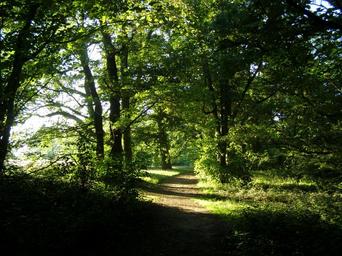
As I’ve written in other posts, I enjoy taking long walks and I often walk on a nature trail near my home.  Although I live in a suburb of a large city, there are many nature areas, parks, and trails so that those of us who live here can experience nature even though we are in an urban area.  Thankfully, many cities have nature areas for the benefit of their residents and also because trees and other vegetation add to the health and beauty of the environment.

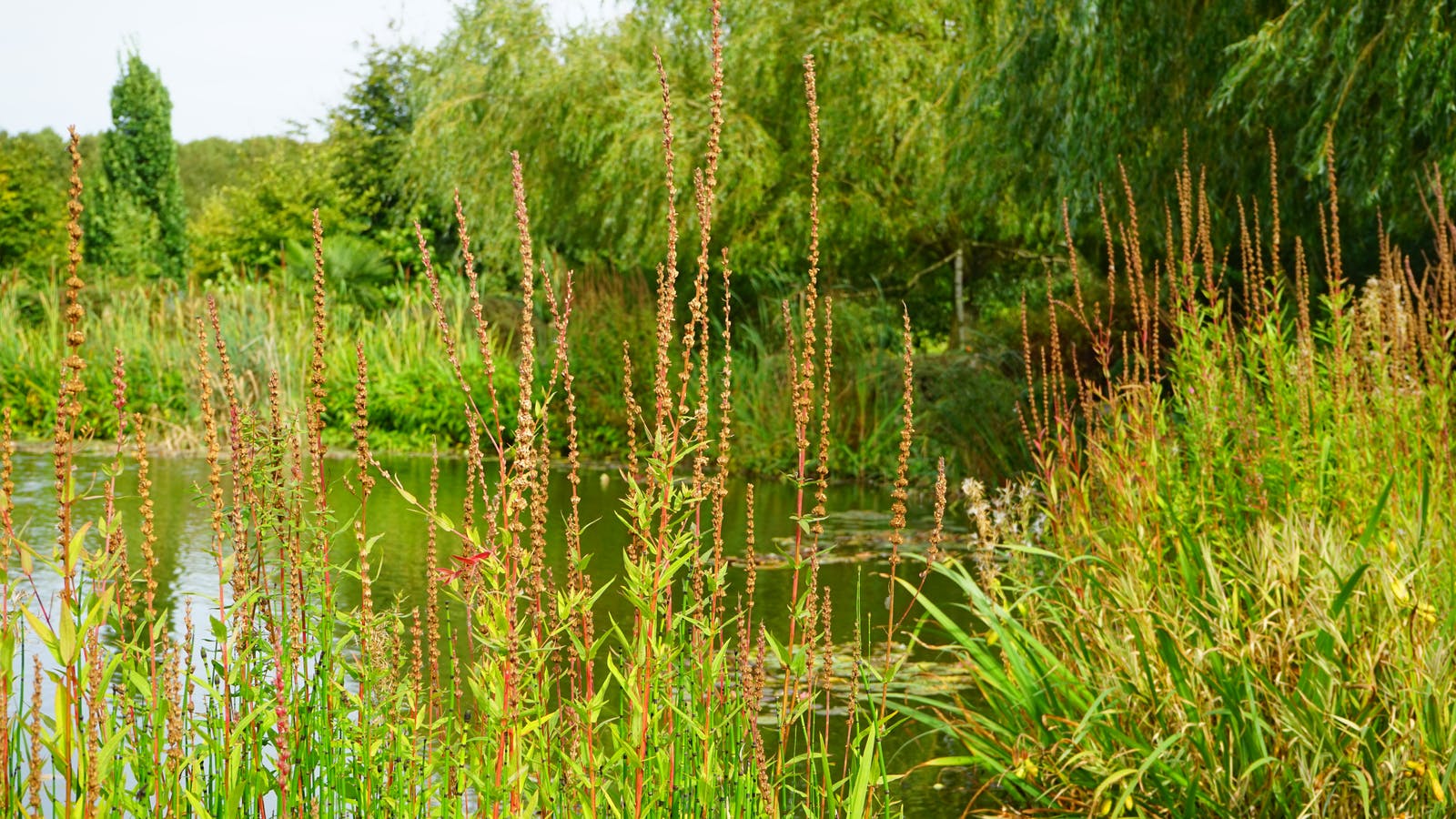
Muir’s words resonate with me, for I often, perhaps always, feel a peacefulness during my walks.  In addition to seeing the various types of trees and tall grasses, the wild flowers, and the nearby lake, I enjoy seeing the birds and other animals–squirrels and rabbits and once in a while an otter.  I had a special surprise when I was walking yesterday when I saw a deer and her fawn.

It has been found that exercise can be an effective form of self-care for people who experience depression, anxiety, and other types of mental illness.  Research points to the release of endorphins and physiological changes that occur when a person exercises that result in the person feeling better.  Exercise is important for both our physical and emotional health.  When exercise takes the form of walking outside, those physiological changes and the peacefulness of being in nature combine to add to our sense of well-being.

As is true of many people, I have a busy life and therefore I’m not able to take walks as often as I would like to.  But each time I do, I’m thankful for nature’s peace that flows into me.  And it is my hope that those of you who are not already doing so will make some time to experience nature’s peace as well.

Living for Others

“A life not lived for others is not a life.”

This quote is by Mother Teresa.  It says a great deal with only a few words.  Her words are a caution to us to not think only about ourselves and our wants and our needs.

There are many ways to live for others.  Recently as I drove past an elementary school, children were getting off buses and walking to the school entrance.  I thought about how each of those children is dear to others—their parents, grandparents, and many other people—and of how the parents entrust their children to the teachers.  The many educators who are dedicated to their work and truly care about helping children to learn are examples of people who live for others.  Many professions include the opportunity to help people, such as employees who assist people living at nursing homes and assisted living residences, hospice workers, daycare personnel, social workers, counselors, and people in the medical professions.  And in those occupations that aren’t referred to as the “helping professions,” there are also opportunities to make someone else’s life better.  Some of the many ways are by treating coworkers with respect, mentoring, and being willing to assist when there are chances to do so.

Of course it isn’t just through our jobs that we have the opportunity to live for others.  We live for others as parents caring for and raising our children, spending time with them, and being good examples for them through our words and our actions.  We also live for others when we spend time with and assist elderly parents and other elderly friends or relatives.

When I think of people who live for others, I also think about the authors whose writing has added so much to my life.  In addition to being impressed by their writing ability and ways of presenting their ideas, I’m impressed by the self-discipline it takes to be a writer, their creativity, and, for many writers, the courage they have to share their ideas and experiences.  I believe that many authors write because they are trying to follow their inner direction.  By following their path, they too are living for others, for all of us whose lives are enriched by what they have written.

And of course, we live for others by supporting causes that matter—causes whose goal is to make our world better for all of us who share this earth.  And yet another way to live for others is through prayer.

Our Creator will help us to find those ways we can live for others.  Yet another reason to do our best to listen to and follow our inner voice.

We Need Nature

“We need nature more than nature needs us. It should be looked upon with awe and humility.”

This quote is by Sadruddin Aga Kahn, who was a statesman and activist.

I recently took my first long walk outside since last fall.  I live in a northern state and in the winter I exercise inside and wait until the weather is milder to do activities outside.  As I write this, the signs of spring where I live are daylight lasting longer into the early evening and temperatures generally becoming warmer, or at least not as cold as they were a month ago.  As I walked along the trail that goes through the woods near where I live, I thought about how I enjoy watching the changes that happen each spring.  The leaves haven’t peaked out on the branches yet, but it won’t be long until the leaf buds will form and a few days later the leaves will appear.  And whereas now I can see quite a ways into the woods, before much time passes the vegetation will be too thick to see very far.  Each stage has its own beauty.

As Kahn says, we need nature.  Spending time outside connects us with nature, and we experience it with all of our senses.  We smell the fresh air and the aromas of wild flowers and new vegetation.  We see the various shades of green of the trees, bushes, vines, and grasses; the sky, with its clouds and sunrays; and the birds of many different colors and sizes, some small like the sparrows and some large like the Canadian geese.  And perhaps there is a lake or stream that is part of what we see as well.  Through our sense of touch, we feel the sun’s warmth, the breeze, the firmness of earth as we walk along.  And we hear birdsong and the leaves moving in the breeze.  Being in nature provides a welcome change from being inside, where many of us spend much of our time, be it at jobs or at home.  Being in nature re-energizes and refreshes us.

The places where I take walks, including the woods near my home, are relatively unpretentious as compared to well-known nature areas such as national parks and monuments.  Such places have spectacular scenery, majestic mountains, and many square miles of protected beauty, and I’m thankful those areas are preserved for many people to experience and appreciate.  Whether it be a well-known nature area or the woods near me or whatever outdoor spaces are near each of us, we should look on them with awe and humility, as Kahn says.  For they add much to our quality of life, often more than we realize.  We need to value and be thankful for them.

Blessed Are They That Mourn

“Blessed are they that mourn, for they shall be comforted.”  Matthew 5:4

Experiencing grief is one of the most difficult things we do during our earthly journey and it hurts deeply.  To no longer be able to be with someone we care about causes a sadness that can feel like it will never end.  In addition to the mourning we do when someone has passed away, we also mourn other losses, such as no longer being with someone who has ended a relationship with us, having a pet die, and other kinds of endings over which we do not have control.

We sometimes try to avoid the pain caused by grief.  We might tell ourselves things like that’s just how life is, we shouldn’t be sad, we should get over it and move on, etc.  And even worse, sometimes other people tell the grieving person such things when what that person needs most is someone who will be present with them, listen, and have empathy for what the person is going through.  As tempting as it is to try to avoid the emotional pain, we must not do that.  Grieving is a natural process.  It is through accepting the sadness and ache that emotional healing happens.

Although we are all unique and grieve in our own ways, with varying degrees of intensity and length of time, grief usually decreases over time.  As it does, we will begin to experience something different, such as memories of that person or pet and of how special they were, things we learned from them, and a sense of gratitude for them having been a part of our lives.  We will be comforted.

Experiencing Kindness

“You cannot do a kindness too soon because you never know how soon it will be too late.”

These words by poet, philosopher, and abolitionist Ralph Waldo Emerson are good for all of us to keep in mind.  I recently had an experience where I was the recipient of kindness.

I needed to go to my job as a crisis line counselor and, because some of my hours are overnight, it was about 10:00 p.m. when I was leaving to drive there.  It had been snowing for a few hours and several inches had accumulated.  I had expected that the parking lot of the building where I live and the street leading out from there would have been cleared during the time I slept before going to work because that often had been the case other times.  But it hadn’t been cleared, or at least it hadn’t been cleared recently.  Because of the amount of snow and because there’s an incline for about two blocks before the street levels out, my car got stuck in the middle of the parking lot.  The conditions were such that the tires couldn’t get traction and just spun when I pressed the accelerator.  So I couldn’t even drive my car a few feet to the side of the parking lot so that it would be out of the way when the person came to do snow removal.

I called the on-call supervisor to ask if someone could cover my hours and that I would work that person’s hours another day.  But my supervisor said no one was available and she offered to arrange for a Lyft ride.  Unless the Lyft driver had four-wheel drive, I don’t think that person could have made it through the snow either.  And the idea of walking to where the street levels out and waiting for who knows how long for the Lyft driver in the dark and cold seemed like an unsafe thing to do.  I have friends who would have given me a ride to work in other circumstances, but I didn’t want to ask someone to take the chance of their vehicle getting stuck.

After sitting in my car a couple of minutes trying to decide what to do, a vehicle came into the parking lot.  The young man who was driving it got out and walked to my car and said he would try to help me.  After digging the snow from around my tires and much other effort, he and his fiancé were able to push my car out of the center of the parking lot to the side.  I told them I was on my way to an overnight shift where I work, and they asked me how far it was.  I told them about 10 miles and they offered to drive me there!  Unlike my small car, they drove a vehicle that was higher above the ground and had four-wheel drive.  What a wonderful gift that they were so generous to take the time and make the effort to do this for me, someone they had never met.

In addition to this being a kindness such as Emerson refers to, this experience shows the way that unanticipated help is given to us.  I had no way of knowing that people would drive into the area where my car was stuck, especially in the late evening in the cold and snow, and especially that they would be two people so willing to help me, even to the extent of taking the time to drive me to my job.  When I was trying to think of possibilities before they arrived—and the possibilities were extremely limited—I could not have expected that someone would show up to help me.  And yet they did.

I expressed my gratitude to them and I expressed my gratitude to the Creator.  Over the years, there have been other times when I received unexpected help, and I’ve heard and read other people’s accounts of receiving assistance that they could not have anticipated, assistance that occurred when they very much needed it.  All of us have received such help.  Help from the universe.

Unexpected Help from The Universe  

“Call it luck or fate if you will, this type of synchronicity has occurred so many times that I now take it as a principle that whatever I need will turn up if I am patient and have the awareness to perceive it.”

This is a quote by Robert A. Johnson, who was a Jungian analyst, author, and speaker.  He wrote several books about inner work, Jungian theory, relationships, and other related topics.  I have been reading his book Balancing Heaven and Earth, subtitled “a memoir of visions, dreams, and realizations.”

The quote above is from that book.  Those words appear after Johnson tells of how, when he was a young man, a friend saw that he was struggling. His friend gently pointed him in the direction that led to Johnson working with a Jungian analyst.  He writes that he didn’t realize how much he needed to do that until after the work began and that the analytical work led to other meaningful experiences.

Throughout the book he tells of other unanticipated occurrences that provided help and direction.  He refers to such synchronicities as the “slender threads” that have guided his life.  The title of one of the chapters says it well:  “Unexpected Friendships; Unexpected Blessings. Slender Threads at Work.”

In his memoir Johnson relates the full picture, never suggesting that things flowed along easily all the time.  Staying on our path and inner change always involve some challenges and adversity.  He shares times when he felt disheartened, without direction, and even depressed. But he had an awareness that something larger than himself was directing his life, and he shares many examples showing how that was the case.

As he says in the quotation above, patience and awareness are needed to perceive when help from the universe is given to us.  It’s essential that we set aside the idea that we’re in control of our destinies.  It simply isn’t true.  Holding on to that idea takes away our ability to be aware of when help is being given to us and thus our ability to embrace that help.  That is a great loss.

Listening to Our Inner Voice

“The quest involves listening to your interior intelligence, taking it seriously, staying true to it, and approaching it with a religious attitude.  In Jungian psychology this quest is called individuation—discovering the uniqueness of you, finding your purpose and meaning.”

I often write about listening to our inner voice and, by trying to live in accordance with what we discern by that listening, becoming the unique person each of us was created to be.  The above quote from the book Living Your Unlived Life by Jungian psychotherapists and authors Robert A. Johnson and Jerry Ruhl states so well what listening to our inner voice involves and what it can lead to.

I write about these ideas because learning about Jungian concepts and dream work, combined with having been given the gift of faith, has resulted in my having a more purposeful and meaningful life.  And my hope is that others who haven’t already discovered these truths will be helped as I have been.

When we don’t have a sense of purpose and meaning, our lives feel empty.  People will try to fill that emptiness in unhealthy ways, such as by using drugs and/or alcohol, overeating, overspending, and making other harmful choices, only to find that what they’re doing doesn’t alleviate the emptiness.  Sometimes those activities provide some relief, but that relief is temporary and the emptiness returns and intensifies.

Trying to do those things that help us to individuate involves effort and a certain amount of sacrifice, in particular sacrificing ego desires that don’t align with inner direction.  Reading books by authors who have written about Jungian concepts makes this clear.  This was also made clear to me by a synchronicity I experienced many years ago.  I had arrived for a session with a Jungian psychotherapist I was seeing and there was a client who had finished his session and was about to leave.  We recognized each other from a therapy group we had attended and greeted each other.  Then the man showed me a pin that was an advertisement for the company where he worked and he asked me if I would like to have one, and I said yes.  On the pin were the words “This Ain’t No Hobby, Pal.”  I don’t recall the type of work this man did.  That didn’t matter.  What mattered was the synchronistic meaning of that occurrence.  What are the chances someone at the therapist’s office would have a pin with those words, would ask me if I would like to have it, and would happen to be there at the time I was arriving?  Extremely small.  The combination of those happenings is what makes this occurrence meaningful.

The words “This Ain’t No Hobby, Pal” signify to me that doing inner work is a serious endeavor and that it requires effort and commitment.  From time to time I think about that occurrence and it serves as a reminder of why doing inner work matters so very much.  As does looking at the pin which I have kept all these years.

Appreciating Each Day 

I recently adopted an elderly cat whose name is Sasha.  I had had one or two cats for most of my adult life, but when the last one passed away a couple of years ago, I decided to wait a while before considering caring for another pet.  I’d look at the pet adoption websites from time to time but never felt ready to make the commitment.  When I thought about adopting, I was quite sure I would adopt an adult cat rather than a kitten, but not a senior.  My hesitation to adopt an older cat was that she would be closer to the end of her life and our time together would be limited. And, if I’m to be honest, I didn’t want to have to feel the sadness of her passing away so soon.

But circumstances led to my adopting an elderly cat.  Sadly, the person Sasha had lived with passed away.  Friends of mine who knew that person had taken Sasha to live with them, but they already have several pets and they said Sasha wasn’t used to being with other animals and didn’t seem happy there. They asked me if I would consider caring for her, and I said yes.  And I’m glad I did, for it has felt right from the moment I made that decision.

In addition to enjoying her company and feeling good about being able to give her a home, Sasha has become a reminder to me:  a reminder to appreciate each day.  I sometimes find myself wondering about the future, thinking about things that might happen in my personal life as well as about the larger picture of national and global happenings.  And, as much as I don’t like this about myself, I will sometimes worry about difficult or sad things that might potentially occur.  When I catch myself doing that, I tell myself to instead appreciate each day I am given and do my best to live each day well, to try to follow my inner path.

The way that Sasha has become a reminder to me to appreciate each day is that instead of wondering how much longer she’ll be with me, I think about how nice it is that I’m able to be with her each day that I am.  She’s a special little presence in my life.

Appreciating the Present Moment

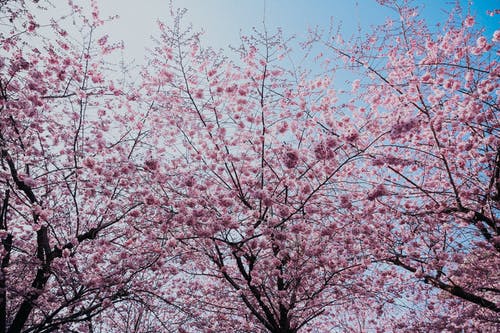
A few days ago I took advantage of having time to take a long walk.  It was a lovely spring day around 70 degrees with sunshine and a light breeze.  In the city where I live there are many crabapple and other flowering trees, and they were in full bloom.  Some had white flowers, others were various shades of pink, and all were beautiful.  Each spring the crabapple flowers bloom for only about two weeks, and I’m thankful I was able to see them.

Taking in the beauty of the flowers reminded me of the importance of appreciating the present moment.  Often we’re so busy thinking about what needs to be done or what we want to do in the future that we don’t notice the special aspects of the present.  I realize our ability to do this depends on what is going on in our lives and of course there are times when it’s essential that we focus on something that needs to be attended to.  What I’m suggesting is that we check in with ourselves to see whether we’ve gotten into a pattern of not noticing those seemingly small things that can help us appreciate parts of each day.

Seeing the flowering trees also reminded me that there is much beauty in our world.  We all know from news stories and history that there are and have been many dark and wrong happenings in our world, and it’s important that we try to do what we can to decrease that darkness.  We can do this by trying to listen to our inner voice and endeavoring to follow our individual paths, and thereby to grow in consciousness.  Every person who becomes more conscious helps to counteract the darkness.  Expressing this symbolically, every person who becomes more conscious is a blossom on a flowering tree, adding to that which is beautiful in our world.

Many Reasons to Be Thankful

As I’ve written in other posts, I very much enjoy taking long walks.  The time I have to do that is limited because of commitments and, because I live in a northern state, walks outside are also limited by wintry weather and the sun setting early.  But today after work I had free time, the weather was mild, and the sun wouldn’t set for another hour, all of which resulted in my having the opportunity to take a walk.  I’m glad I took advantage of having that opportunity.

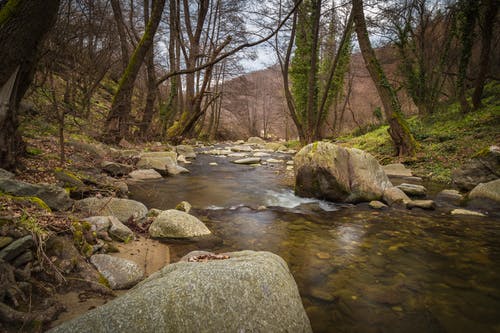
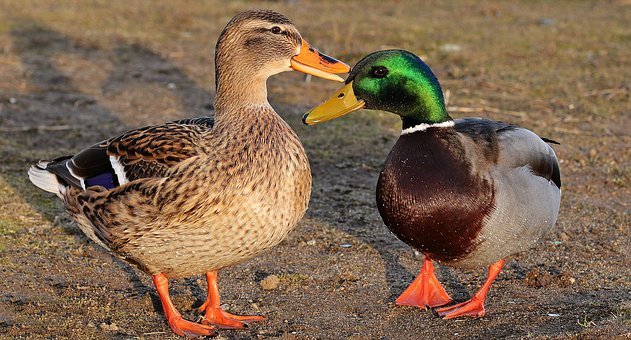
There has been much written about the connection between we human beings and nature.  Breathing in the fresh air, seeing the trees and grass and pretty clear sky, and feeling the breeze on my face were all aspects of that connection today.  At one point the walking path that I took went alongside a stream.  The middle of the stream where the current flows is no longer iced over, and several mallard ducks had found that stretch of open water.  Seeing them made me think about how, as the weather gets warmer, there will be more opportunities to see both the birds that live in this area year around and those that will return after spending the winter further south.  As I walked along, I felt the peacefulness that being in nature often invokes.

When I’m walking, in addition to taking in the surroundings, I find it a time to be thankful.  Thankful that I have good health to be able to move along briskly, that I live in an area where there are walking paths nearby and pretty areas to walk through, and that I have the freedom to choose what activity I want to do.  Not everyone has those blessings.  Knowing that also gives me another opportunity:  to pray for the people who do not have those blessings and to pray in thanksgiving that I do.  It’s in those moments that we realize we must not take anything for granted.