Giving Cheerfully and Receiving Gratefully

“When we give cheerfully and accept gratefully, everyone is blessed.”  I recently had an experience that exemplifies these words of poet, singer, and civil rights activist Maya Angelou.

I needed to have a few pieces of furniture moved to my home and was considering hiring movers.  There were some items light enough that I could have moved them without assistance, but there were two larger and heavier pieces that required at least two people to move them.  But my daughter told me not to hire movers because she and her fiancé wanted to do the moving for me.

They were so helpful:  they arranged to rent and picked up a van, moved most of the furniture without my help, having me hold open doors and carry some small items, and in general did a great job.  And I could see they took pleasure in doing this for me.  It was also an opportunity to spend some time together, something that is always special for me.  It was certainly a situation where they gave cheerfully and I accepted gratefully—and joyfully.

For the most part I would say I tend to give cheerfully, for I enjoy helping people.  I hope and believe this is because I want others to benefit from my assistance as well as from the assistance they receive from others.  But I also recognize that giving to others makes me feel good about myself.

I need to improve, however, on accepting help.  It’s not that I’m ungrateful when I receive assistance or gifts, for I am thankful and express my gratitude.  It’s more that I tend to shy away from receiving help.  I’m used to doing most things myself, not depending on others, and being quite independent.  I’m hesitant to ask for help unless it’s essential that I do so.  Part of me thinks I should do whatever needs to be done on my own, and there’s also a part of me who doesn’t want to feel like I’m bothering someone by asking for help.

In both giving and accepting, discernment is important.  When we try to live in a thoughtful and conscious way, we are better able to determine those times when giving is part of our path and also when accepting is part of our path.  We should avoid doing either in situations where we are just following a “societal should” or trying to look good rather than acting from our hearts.

Ms. Angelou’s words remind us that both giving and receiving are ways of expressing generosity and caring.  Accepting a person’s offer to be of assistance can mean a lot to that person.  And being generous when it feels like the right thing to do makes our lives more meaningful.  At those times both the giver and the receiver truly are blessed.
Being Thankful for the Little Things 

“Enjoy the little things, for one day you may look back and realize they were the big things.” –Robert Brault

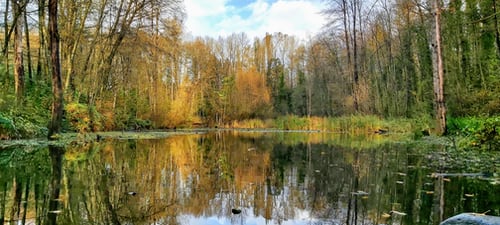
Something I enjoy doing is taking a walk on the trail that is near my home.  It goes around a small lake and is about a two and a half mile walk.  I took that walk this afternoon, and shortly after I started out a light snow began to fall.  It was very pretty and peaceful.

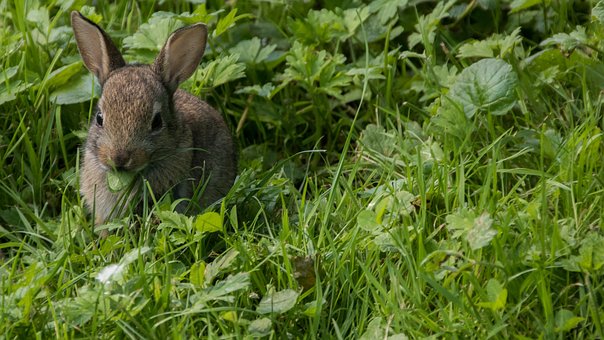
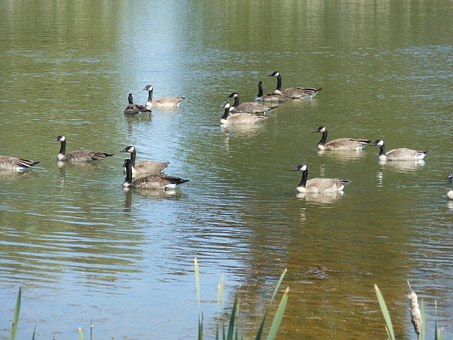
I can usually fit in taking this walk around the lake two or three times a week.  In addition to walking being a way to help maintain my health, I enjoy being outside, breathing in the fresh air, seeing the lake and trees and sky, and also seeing whatever animals might appear.  There were a lot of Canadian geese on the lake as well as some flying overhead.  I thought about how those on the lake are probably making a stop before heading south again.  I also saw some squirrels and a rabbit today.

Often when I’m taking a walk, I find myself giving thanks for my ability to do this.  When we are healthy, it can be easy to take for granted our ability to do many of the things we routinely do each day—including being able to walk.  I recently met a young woman who cannot walk and has needed to use a wheelchair since early childhood.  She has adapted well and I’m impressed with all she does despite that limitation.  I hope if I ever lose the ability to walk, I will accept that and adapt to it also.  But seeing her reminds me of one of the many things for which I am thankful.

It also brings to mind the quotation by writer Robert Brault which I put at the beginning of this post.  His reminder to “enjoy the little things” applies to a great many aspects of each of our lives.  Each of us should take a few minutes every day to think about and say a prayer of thanksgiving for the many abilities we have been given.

Appreciating Illustrators of Children’s Books and Their Creations 

I recently read the children’s picture book Melvin and the Boy, written and illustrated by Lauren Castillo.  One of the many special things I experienced while raising my daughter was reading to her when she was young.  She is an adult now and living on her own, but I continue to reserve children’s books at the library from time to time to read myself.  In addition to enjoying the stories, I like looking at the illustrations.  The talent and creativity of the illustrators and the various styles of art are impressive.  The illustrations not only reflect the story but also supplement the story.

Melvin and the Boy is an excellent example of storytelling where the illustrations both reflect the story and add to the reading experience.  I won’t tell you the story because I want you to read and enjoy it yourself, except to say a young boy needs to deal with a disappointment and make a decision.  The artwork of course shows the boy and the turtle whom the boy named Melvin, the park, and the boy’s parents who are part of the story.  But in addition the pictures show more than what the words of the story say.  The story doesn’t say the parents are concerned, but the illustrations show the parents’ facial expressions of concern and affection for their son.  The story doesn’t say in words that the parents love each other, but the fondness they have for each other is shown by their holding hands while walking together and in other ways.  And the story doesn’t directly have the parents tell their son they’ll be there for him whatever his decision, but the illustration of the boy walking home with his parents on either side of him at the end of the story makes that clear.

So in addition to hearing the words of the story, which are special in themselves, children seeing the illustrations of positive, accepting, and loving ways people interact is bound to have an influence on them.  These are such important qualities for each of us to have toward others, and it’s never too early for children to see examples of them.  Yet another reason to read to the children in our lives.  And to appreciate the books as adults as well.

Loved Ones Are Always with Us

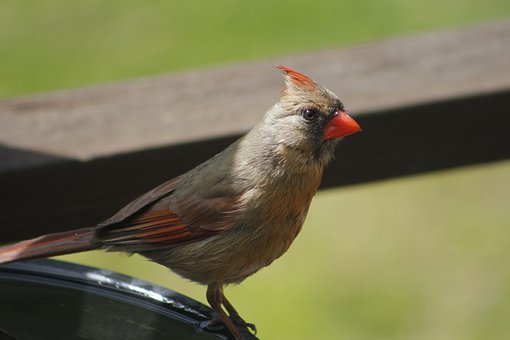
Yesterday I was sitting in a chair facing a large window and looking outside while talking to a friend on the phone.  The bright red of a cardinal caught my eye as it flew and then perched on the branch of a nearby tree.  About two seconds later, a female cardinal arrived and alighted on a branch a few inches from the male cardinal.  Although it is my understanding that cardinals live year round in the area where I live, I rarely see them, which made this special.  It was special too that they stayed in the tree for several minutes so I could enjoy watching them.

I appreciate life’s small surprises, and this was one.  When birds catch my eye, in addition to the enjoyment of seeing them, I also think of the symbolism of birds in dreams:  they symbolize the soul.  When we are reminded of our soul, we are reminded that we were created by the Creator, and for that reason each of us matters and we are loved.  And also that we need to try to discern the purposes for which we were created by listening to our inner voice and endeavoring to live according to its guidance.

Seeing the cardinals and noticing how they remained several minutes before flying away made me curious to learn the symbolism of cardinals in particular.  By doing some research, I learned that cardinals are believed to be representatives of loved ones who have passed away, and that their presence shows us that they are always with us.  Learning this touched my heart, because my mother passed away about a month ago.  I also had the thought that perhaps the other cardinal represented my father, who passed away 14 years ago, stopping by to show me he is with me too.

Loved ones are also with us in our memories.  I’m thankful for memories I have of times with my parents and with other people I have known who have completed their earthly journeys.

Being Patient

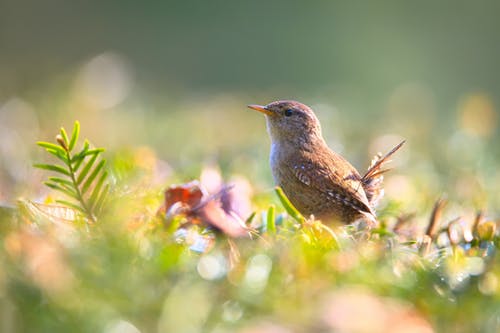
The other day when I was sitting at my desk, I noticed a slight movement outside.  I looked out the window, and I saw a small bird standing on a beam under the eave.  The movement I’d seen was the bird flying to that spot.  And right beside the bird was a nest which, as I was watching, the bird settled into.  It’s spring as I write this and perhaps there are eggs in the nest, or soon will be.

In addition to being impressed by the bird’s choice of a place to build the nest that is protected from wind and rain and predators, seeing that little bird in its nest reminded me of the quality of patience.  It is instinctual of course for birds to spend however much time is needed being still keeping their eggs warm until it’s time for their chicks to hatch.  For many people, such patience doesn’t come so naturally.  I consider myself to be a generally patient person, but then I catch myself at times when that isn’t so.  As when the person in the car ahead of me isn’t watching the light change and I feel some tension as I wait for them to get going.  Or when I go to a meeting and, because some people aren’t on time, the meeting starts late.

There are many life circumstances where having patience is essential.  Illnesses must run their course and we need to take care of ourselves as they do.  Injuries need a certain amount of time to heal, no matter how much we want to be active again.  Children at different ages and developmental levels are only able to do certain things, and it’s important for the children’s wellbeing that we as parents and caregivers recognize this.  Goals we set for ourselves require time as we work toward them.  These are just a few of many examples.

St. Augustine, a Christian theologian and philosopher who lived in the late fourth and early fifth centuries, wrote:  “Patience is the companion of wisdom.”  When life circumstances require us to be patient, it is in our best interest that we endeavor to be so.

Seeing that little bird in its nest is an example of how our connection with nature can provide moments of reflection.  For me, it also had synchronistic meaning.  Synchronicities are acausal meaningful occurrences.  I believe there is a reason I happened to be sitting where I was at a time the bird flew near the window and caught my attention.  For this took place during a period of time when some things are occurring that are not in my control, that may last for quite a while yet, and for which the outcome is uncertain, all of which require that I have greater patience than I’ve ever needed to have.  This synchronicity affirmed for me that waiting patiently is what I need to continue to do in my present situation.  Receiving that message helps me to do that, and I’m thankful the message was given to me.

Giving Children the Gift of Reading

I have been enjoying reading author Meghan Cox Gurdon’s book The Enchanted Hour: The Miraculous Power of Reading Aloud in the Age of Distraction.

As a parent, I knew intuitively that reading to my daughter when she was a child would be an expression of my love and a way to show her that she mattered. I also knew it would help her to become a better reader and improve her ability to express herself. By being introduced through stories to people, places, and experiences outside of her day-to-day surroundings and interactions with others, she would gain a larger vocabulary and knowledge of the world.

Ms. Cox Gurdon’s book confirms what I experienced by reading to my daughter and in addition has added much to my knowledge about how children gain from being read to by others. The author writes about her personal experience reading to her children, presents findings of many research studies, and shares what she learned from her interviews with experts in child development and related fields. For example, studies have shown that children listening to audiobooks by themselves gain very little as compared to being read to by someone in person. Similarly, research shows that electronic reading toys and tablets have few benefits. Parents and caregivers should not be influenced by misleading advertising that suggests otherwise.

It is recommended that reading to children begin when they are babies. Some adults might question this because babies are too young to understand the actual words. But research has shown that listening to reading causes connections to take place in children’s brains even at a very young age, and of course the physical closeness to the person holding them as they are reading is a valuable nurturing experience.

Another fact that made an impression on me was that it is not only the reading of the words of the book that has a positive influence, but also that looking at the illustrations adds to what a child takes in. There are and have been for many years numerous talented illustrators of children’s books. Talking to children about what they see in the illustrations, and pointing to objects, people, animals, etc. that appear on the pages, add to children’s knowledge and to the enjoyable interaction.

The author sums up her experience of reading to her children as well as what she learned in researching her book in this way: “Reading every day with children can’t guarantee perfect outcomes for any family—not in grades, not in happiness, not in relationships. But it is as close to a miracle product as we can buy, and it doesn’t cost a nickel. As a flawed, fallible person with an imperfect temper, I know that reading every night is not just the nicest thing I’ve done with my children but represents, without question, the best I have been able to give them as their mother.”

I encourage parents, guardians, grandparents, and others who have close relationships with children to share the gift of reading with those children. The benefits are great, both for those being read to and for those doing the reading.

A Simple But Great Gift

I recently came upon this quote in a magazine I was reading: “To read aloud to someone you love is the simplest of gifts, and one of the greatest.” The quote is by Meghan Cox Gurdon, an essayist, book critic, and former foreign correspondent.

I have a daughter who is an adult now, and among my fondest memories is our time reading together. I started reading to her when she was a baby and read to her throughout her childhood years. It was clear we both looked forward to it. In addition to the known benefits of reading to children of helping to develop their creativity and intellectual ability, our reading time together was a sharing of love.

Although my main motivation for reading to my daughter was for her benefit, for I believe reading to children is one aspect of good parenting, I also gained by being exposed to many excellent children’s books and their wonderful illustrations.

Because I was not familiar with Meghan Cox Gurdon, I looked online and learned that she wrote and recently published a book entitled The Enchanted Hour. I look forward to reading it!

Precious Moments

I visited my elderly mother at her assisted living apartment after work today, something I usually do several times a week. She has late-onset Alzheimer’s disease. Thankfully, it didn’t start until she was 96 years old. I’m also thankful that she knows who I am and always gives me a big smile when I arrive. I have friends whose parents had Alzheimer’s disease and who no longer recognized them. As much as we all need to accept such changes, it can be distressing when that happens.

A pattern my mother has is to tell me how much she likes the outfit I’m wearing and that it is pretty. It’s often one of the first things she says, and she usually says it at least six times during our hour-long visit. She compliments clothing she has seen many times but she doesn’t remember having seen before. I respond each time, thanking her for the compliment or telling her I like it too.

I feel gratitude both for her and for me that she seems basically content despite having memory issues. She always thanks me for helping her and for visiting her. And I thank her for all she did for me throughout the years, including taking care of me when I was a child, cooking delicious meals, and encouraging me to go to college even though our family was not well off financially.

Visiting my mother and seeing the other people who live on the floor where she lives remind me both to count my blessings for all the abilities I have and to try to live each day well, because they certainly pass by quickly.

Connecting with Nature

This morning I walked about a mile and a half from my home to the bus station where I catch a bus to my job. Although I live in an urban area, the walking path I took goes along a small lake and there are many trees, bushes, and tall grasses along the lake. It is early spring as I write this and I enjoyed seeing ducks and Canadian geese on the lake and many other types of birds flying about. I saw a robin—a sure sign that spring has arrived. And I enjoyed listening to the bird song as I walked along. Another special aspect of my morning excursion was seeing the leaf buds and small leaves appearing on the trees and bushes. It was a cool morning and the breeze was refreshing.

Because of various commitments, I’m not able to spend the time taking this walk every day. But when there is time for it, it is special. The importance and benefits of having a connection with nature are emphasized in wellness books and articles. It’s as if it is an innate part of being human to want that connection, part of our inheritance from the past when most human beings didn’t live in cities and didn’t have sedentary jobs as the majority of us do now.

Each time I have a chance to take that walk or spend time outdoors in other ways, I feel the positive effects. It’s important for all of us to do that for ourselves from time to time.

Words of Appreciation

I would like to say thank you to the many people who do the behind-the-scenes work that is essential but that is generally taken for granted. There are many people who work in jobs that fit this description, but I’m thinking about the people who clean offices and other businesses. I work in a building that has several floors. Each day at 6:00 p.m. when most employees have left for the day, the cleaning crew arrives, works several hours, and returns to their homes late at night. And each morning we employees return to clean work spaces and restrooms and emptied wastebaskets. It’s just expected our office will be clean and orderly when we arrive to work each day, and it’s easy to forget the people who make it that way. I’m sure those workers do not earn very much money and I’m sure for some of them it is their second or third job as they try to provide for their families and themselves.

So to those workers I want to say thank you for what you do that makes my life nicer. I appreciate you.